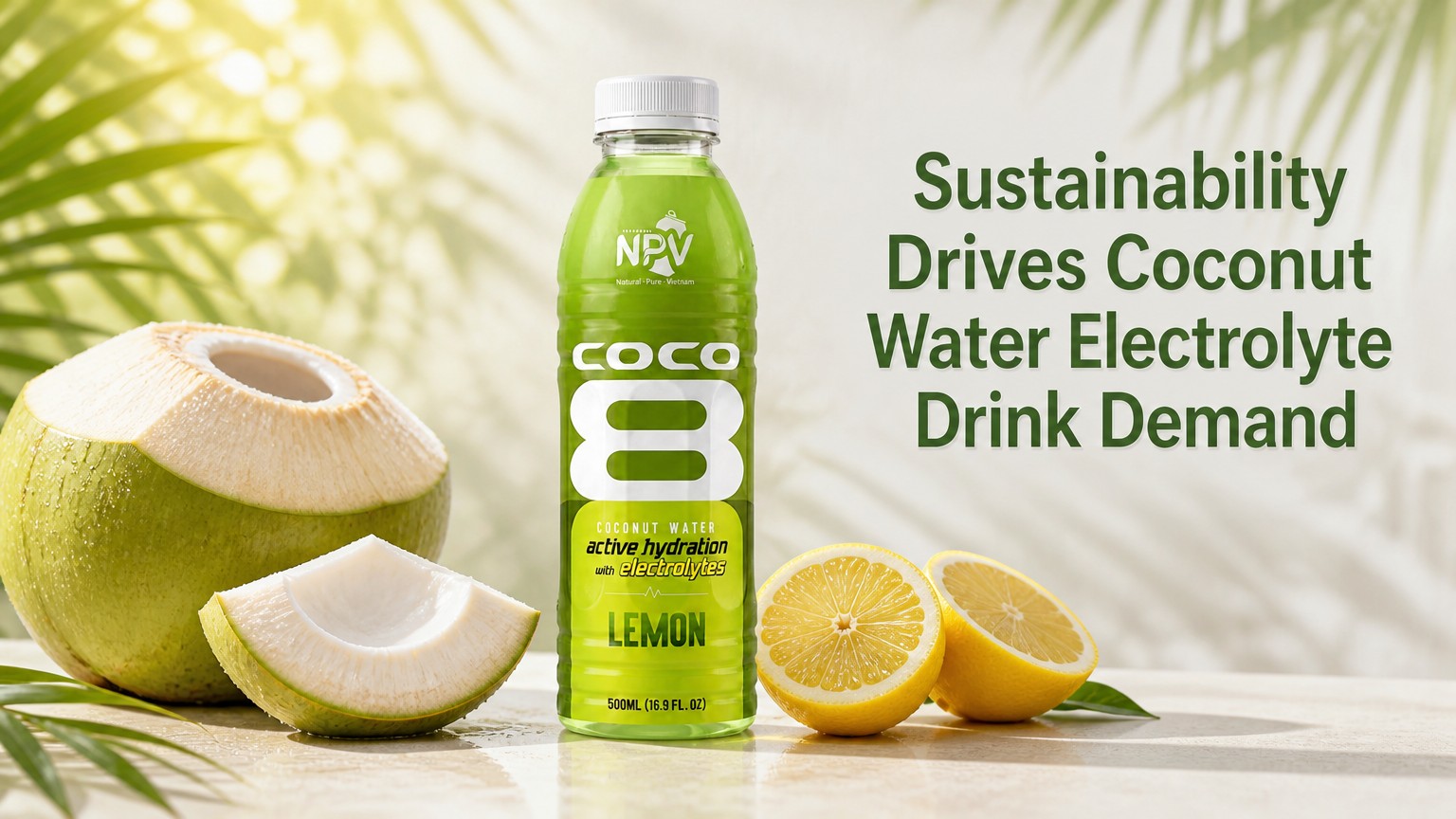
The global beverage industry is undergoing a quiet transformation as sustainability reshapes how manufacturers source, package, and distribute drinks across international markets. At the center of this shift sits the coconut water electrolyte drink category, where tropical sourcing meets consumer demand for cleaner labels and recyclable packaging. NPV Beverage, a Vietnamese manufacturer established in 2019, has positioned its 500ml lemon coconut water electrolyte drink squarely within this evolving landscape, offering buyers a product that aligns with both flavor expectations and responsible sourcing narratives.
Key Takeaways
- Sustainability and clean-label preferences are reshaping demand for coconut water electrolyte drinks worldwide.
- NPV’s 500ml lemon coconut water electrolyte drink uses recyclable PET packaging and Vietnamese-sourced coconut water.
- Certifications including BRC, FSSC 22000, Halal, Kosher, ISO, GMP, HACCP, and SMETA support export readiness across 200+ countries.
- OEM and ODM partnerships allow brands to customize flavors, labels, and packaging for regional markets.
- Regional beverage players from PepsiCo to LVMH are recalibrating portfolios amid shifting consumer preferences.
Industry observers note that the intersection of hydration trends and environmental responsibility has created fresh commercial openings for Vietnamese exporters. The NPV 500ml lemon coconut water electrolyte drink represents one such opportunity, combining a light tropical flavor profile with packaging designed for on-the-go consumption and material recovery streams.
Sustainability Reshapes the Coconut Water Category
Environmental considerations now influence purchasing decisions at every level of the beverage supply chain.
Buyers in Europe, North America, and the Middle East increasingly evaluate drinks not only on taste and price but on the traceability of raw materials and the recyclability of containers. Coconut water, harvested from renewable palm resources across Southeast Asia, carries an inherent sourcing story that resonates with these expectations. When that coconut water is paired with lemon and electrolytes in a recyclable PET bottle, the product speaks to both functional hydration preferences and packaging responsibility.
The PET format itself has drawn renewed attention. While earlier debates centered on single-use plastics, the beverage sector has moved toward higher-grade PET resins that integrate more smoothly into established recycling streams. Manufacturers who can demonstrate consistent material specifications and lightweighting efforts gain an edge in tenders from multinational retailers and distributors. Coconut water electrolyte drink products packaged this way are increasingly shortlisted for private label programs that carry explicit sustainability scorecards.
Flavor Innovation Meets Clean Label Expectations
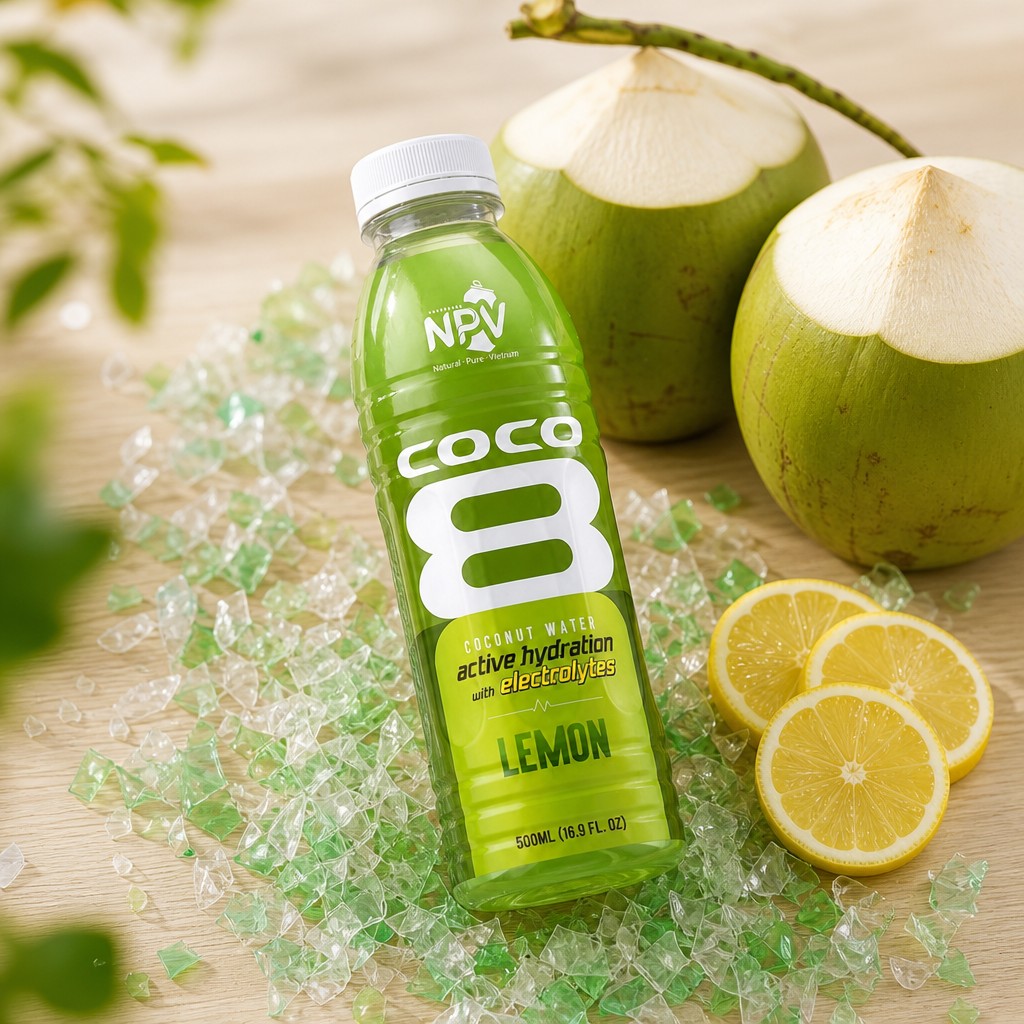
Lemon-infused coconut water offers a flavor bridge between classic tropical profiles and the citrus-forward preferences observed in Western markets. The combination delivers a crisp, lightly tart finish without relying on complex flavor systems, which simplifies ingredient declarations on labels. For brand owners pursuing shorter ingredient lists, this simplicity translates directly into packaging copy that satisfies retailer screening processes.
Electrolyte additions further differentiate the drink within the broader coconut water shelf. Rather than positioning the product as a specialized sports beverage, NPV frames it as an everyday hydration option suited to commutes, outdoor activities, and post-exercise moments. This broad usage context widens the addressable market beyond niche athletic channels into mainstream grocery and convenience formats.
Taste panels conducted by regional distributors frequently highlight the balance between coconut water’s natural sweetness and lemon’s brightness. That balance matters in markets where consumers compare offerings side by side on shelf, and where a single off-note can push a product toward clearance pricing. Consistency across production batches, supported by strict quality control protocols, remains a decisive factor for repeat orders.
From Our Orchards and Coconut Groves
Vietnam’s coconut-growing regions provide the raw foundation for this category, with farming communities supplying young coconut water to processors across the Mekong Delta and central coastal provinces.
The journey from grove to bottle begins with careful selection of young coconuts, whose water content and flavor clarity differ markedly from mature fruit. Producers who maintain close relationships with local farms gain earlier visibility into harvest conditions, enabling better planning for seasonal demand peaks and export schedules. Traceability from grove to filling line has become a standard requirement in buyer audits, and Vietnamese suppliers have invested in documentation systems to meet those expectations.
Raw material partnerships also influence sustainability credentials. When manufacturers can point to established relationships with farming communities, they add a layer of social and environmental accountability to their sourcing claims. This narrative appeals to importers in Europe and Oceania, where supply chain transparency is increasingly written into procurement frameworks. The NPV coconut water product range draws on these Vietnamese sourcing networks to deliver consistent flavor and quality across export orders.
One well-documented example of this farm-to-bottle model is the Ben Tre coconut farm journey from plantation to high-quality products, which illustrates how regional growers and beverage manufacturers coordinate on harvest timing, quality grading, and logistics. Such collaborations underpin the reliability that international buyers demand when placing recurring orders.
For teams evaluating sourcing options, visiting growing regions remains one of the most effective ways to verify practices firsthand. Video documentation from operations like the coconut water farm tour offers a window into how raw coconuts move from field collection through initial processing stages.
OEM and Private Label Opportunities for Global Brands
Flexible manufacturing models are opening the coconut water electrolyte segment to brands that lack their own production assets.
OEM and ODM services allow companies to bring a lemon coconut water electrolyte drink to market without building factories or securing raw material contracts independently. Under these arrangements, the manufacturer handles formulation, filling, labeling, and compliance documentation while the brand owner retains creative control over positioning and design. NPV supports this model with customizable flavors, packaging formats, and label artwork, giving partners the latitude to adapt the product for specific retail environments. RITA, a Vietnamese beverage specialist with deep OEM and export capabilities, has similarly helped international brands navigate private label development across juice, coconut, and functional drink categories.
Private label programs thrive when the underlying product already meets international food safety benchmarks. NPV’s production environment holds BRC, FSSC 22000, Halal Jakim, Halal HCA-GCC, Kosher, ISO, GMP, HACCP, and SMETA certifications, covering the regulatory expectations of buyers in the Middle East, Europe, and North America simultaneously. Having these credentials in place shortens audit cycles and reduces the compliance burden on brand partners.
The 500ml PET bottle format with a secure screw cap suits a range of channel strategies, from airport convenience coolers to supermarket multipacks. Brands can adjust closure types, label materials, and case configurations depending on regional preferences, while the manufacturer manages production scheduling and freight coordination from Vietnam.
Buyers exploring the broader NPV lemon coconut water electrolyte drink offering will find that customization extends to electrolyte levels and sweetness profiles, enabling fine-tuned positioning against local competitors.
Export Infrastructure and Market Access
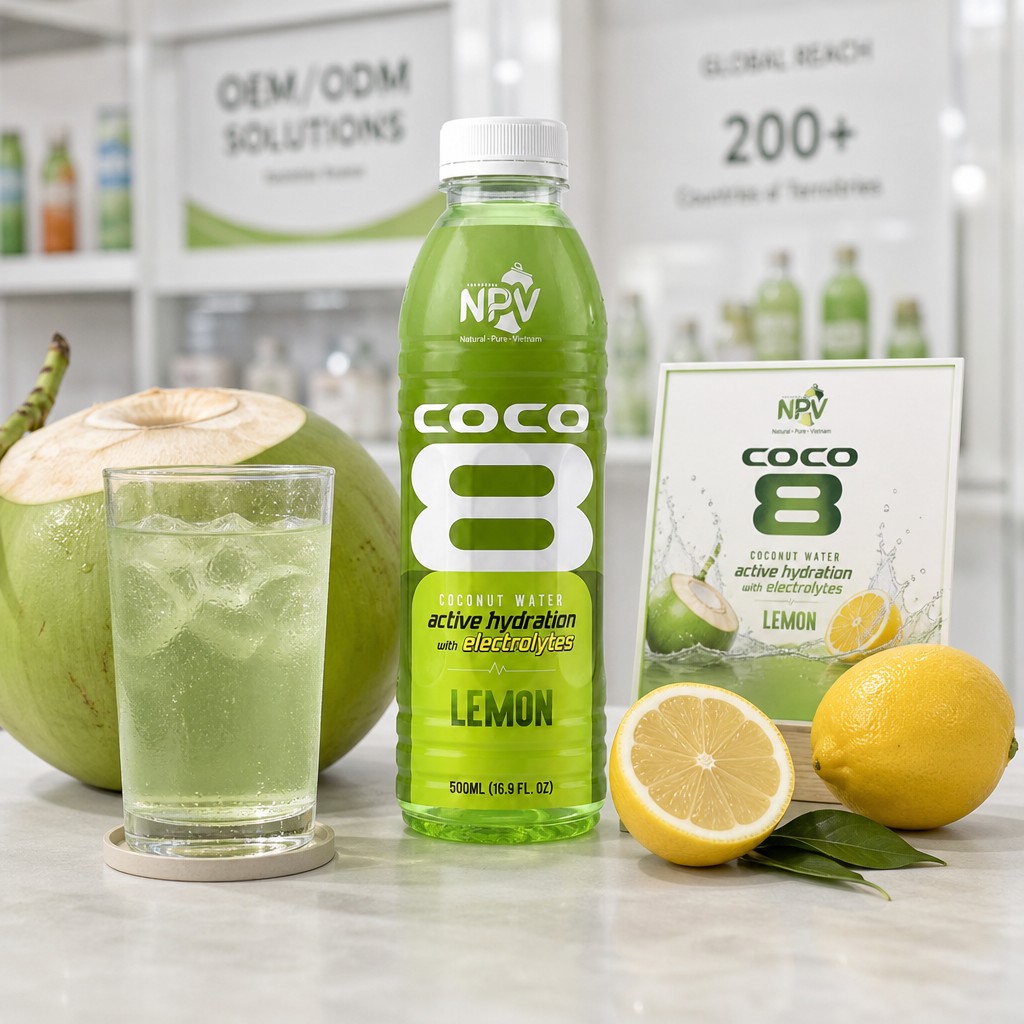
Reaching buyers across 200+ countries and territories requires more than a strong product; it demands logistics fluency and documentation discipline.
NPV’s export footprint spans Asia, Europe, the Americas, the Middle East, Africa, and Oceania, reflecting a distribution strategy built on diversified demand rather than reliance on any single corridor. This breadth helps buffer against regional disruptions, whether shipping lane congestion or shifting import tariffs. For a coconut water electrolyte drink aimed at active, on-the-go consumers, wide geographic reach also means the product can be tested across multiple climates and retail formats before a brand commits to a full-scale rollout.
Certification portability plays a decisive role in this expansion. Halal credentials open doors across Gulf Cooperation Council and Southeast Asian markets, while Kosher approval supports placements in North American and European retail chains with dedicated dietary sections. BRC and FSSC 22000 certifications align with the technical standards many European grocers reference during supplier qualification, and SMETA documentation addresses ethical audit requirements that have become standard in UK and French sourcing programs.
Regional Beverage Signals Worth Watching
Recent moves by major beverage groups offer useful context for where category investment is heading.
PepsiCo has adjusted its estimated payout related to the Poppi acquisition, signaling continued attention to better-for-you drink brands even as valuations recalibrate. In Europe, Olvi’s share price declined after a profit warning, a reminder that regional brewers and soft drink makers remain sensitive to input cost swings. Nestlé earmarked additional funds for Mexico, underscoring continued capital deployment in Latin American operations. Kirin partnered with HiteJinro for beer production in South Korea, highlighting cross-border manufacturing collaborations as a growth lever. Meanwhile, LVMH’s wine and spirits sales continue to grow, indicating that premium beverage segments still attract resilient spending.
Together, these developments point to a market where portfolio diversification, regional partnerships, and premiumization coexist. For smaller and mid-sized manufacturers, the implication is clear: products that combine distinctive flavor, credible certifications, and responsible packaging can compete for shelf space even as larger players consolidate.
Why the 500ml PET Format Fits Modern Retail
Packaging choices carry commercial weight far beyond product protection.
The 500ml volume aligns with single-serve consumption patterns dominant in convenience and travel retail, where shoppers favor containers they can finish in one sitting. A screw cap adds resealability for consumers who sip intermittently during commutes or workouts, extending the drinking occasion beyond the initial open. Clear PET allows the pale green hue of the lemon coconut water blend to show through, giving merchandisers an honest visual cue that supports impulse purchase decisions.
From a sustainability standpoint, mono-material PET bottles stream more easily into existing recycling infrastructure compared to multi-layer or composite packaging. Lightweighting trends in the industry have reduced resin use per bottle without compromising structural integrity during pallet stacking and long-distance shipping. Brands pairing the coconut water electrolyte drink format with recycled-content resin claims can further strengthen their environmental messaging at point of sale.
Label design flexibility rounds out the format’s appeal. Whether a partner prefers a full-body sleeve, a front-and-back label, or a minimalist wrap, the cylindrical surface accommodates regulatory text, multilingual copy, and branding elements without crowding. This adaptability matters for exporters serving markets with differing labeling laws.
Frequently Asked Questions
What makes the NPV 500ml lemon coconut water electrolyte drink suitable for export markets?
The product combines Vietnamese-sourced coconut water with lemon flavor and electrolyte additions, packaged in recyclable 500ml PET bottles. NPV holds BRC, FSSC 22000, Halal, Kosher, ISO, GMP, HACCP, and SMETA certifications, supporting compliance across diverse import requirements. The company exports to more than 200 countries and territories.
Can brands customize the flavor and packaging of this coconut water electrolyte drink?
Yes. NPV offers OEM and ODM services that allow partners to adjust flavor profiles, electrolyte levels, label artwork, closure types, and case configurations. Private label programs are supported by flexible production scheduling and logistics coordination from Vietnam.
How does the PET packaging support sustainability goals?
The 500ml bottle uses mono-material PET, which integrates into established recycling streams more readily than multi-layer alternatives. Lightweighting practices reduce resin usage per unit while maintaining durability during shipping and shelf display.
Which markets does NPV serve with this product?NPV operates across Asia, Europe, the Americas, the Middle East, Africa, and Oceania, delivering products to buyers in over 200 countries and territories. Certification coverage supports placements ranging from Gulf region Halal requirements to European retail audit standards.