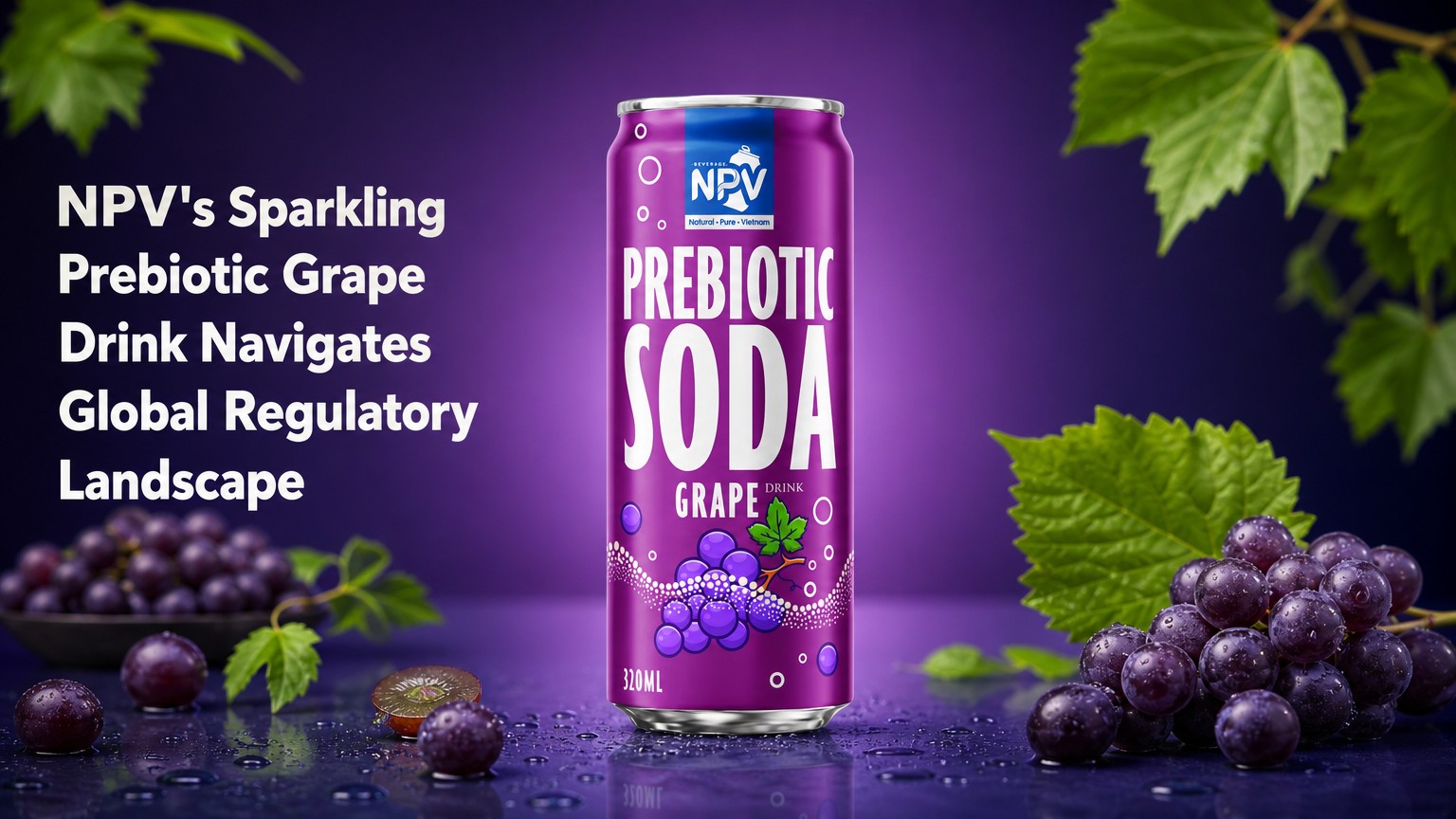
The global non-alcoholic beverage market is undergoing a significant transformation, driven by consumer demand for innovative formulations that balance enjoyment with wellness-oriented attributes. Navigating this dynamic space requires more than just a compelling taste profile; it demands rigorous adherence to a complex web of international food safety, labeling, and ingredient regulations. In this context, Nguyen Pham Viet Beverage Co., Ltd. (NPV) is positioning its new Sparkling Prebiotic Grape Drink 320ml Can as a product engineered for worldwide market access, meeting stringent standards across multiple continents.
Key Takeaways
- NPV’s sparkling grape beverage is formulated with a low-calorie profile and a prebiotic ingredient, designed to meet global trends for functional yet light refreshments.
- The product holds a comprehensive suite of international certifications (BRC, FSSC 22000, ISO, Halal, Kosher) essential for entry into regulated markets in Asia, Europe, the Americas, and the Middle East.
- As an OEM/ODM manufacturer, NPV offers extensive customization, allowing brand owners to align the product with specific market regulations and consumer preferences.
- The 320ml aluminum can format is optimized for efficient global logistics, retail display, and compliance with packaging waste directives.
- Strategic sourcing from vineyards, such as those in Vietnam’s grape-growing regions, supports supply chain traceability, a growing regulatory expectation.
The Surge in Low-Calorie Sparkling Beverages and Regulatory Hurdles
The beverage aisle is seeing a steady increase in products that offer effervescence without the high sugar content of traditional sodas. This trend, however, introduces specific regulatory challenges. Products making claims about calorie reduction, sweetness levels, or added ingredients like prebiotics must comply with distinct labeling laws and approval processes in each target country.
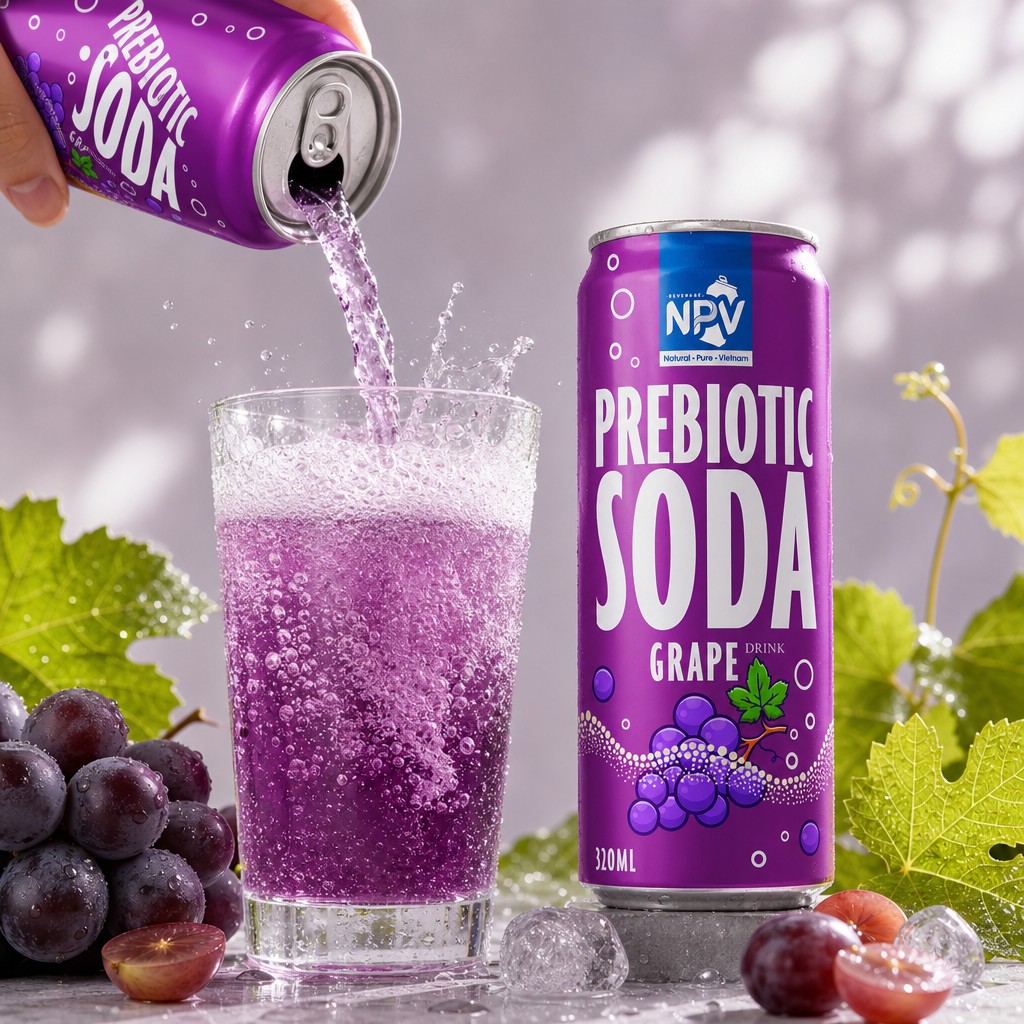
A beverage like the Sparkling Prebiotic Grape Drink must therefore have a meticulously documented formulation. Its low-calorie designation requires precise nutritional analysis and verification to meet definitions set by bodies such as the U.S. FDA, the European Food Safety Authority (EFSA), and other national agencies. Furthermore, the inclusion of a prebiotic ingredient places it in the functional food and beverage category, which is subject to additional scrutiny regarding permissible ingredients, dosage limits, and the language allowed on packaging.
Certifications: The Passport to Global Markets
For a product intended for export to over 200 countries, a robust certification portfolio is non-negotiable. NPV has invested in achieving a suite of globally recognized standards that serve as a common language of safety and quality for importers and retailers.
- FSSC 22000 & BRC Global Standards: These certifications are often mandatory for supplying major retail chains in Europe and North America, providing assurance of a comprehensive food safety management system.
- ISO & GMP: Demonstrating quality management and Good Manufacturing Practices ensures consistency in production, a critical factor for maintaining product integrity across long-distance supply chains.
- Halal & Kosher Certifications: These are essential for accessing markets in the Middle East, North Africa, and communities worldwide with specific dietary requirements. Holding both Halal Jakim and Halal HCA-GCC certifications shows a targeted approach to these lucrative regions.
- HACCP & SMETA: Implementing Hazard Analysis Critical Control Points (HACCP) is a baseline for food safety, while SMETA (Sedex Members Ethical Trade Audit) addresses growing consumer and regulatory focus on ethical supply chains.
From Vine to Can: Sourcing and Traceability in a Regulated World
Modern food regulations increasingly emphasize supply chain transparency. Consumers and regulators alike are asking where ingredients come from and how they are handled. For a grape-flavored beverage, this starts at the source. NPV leverages its partnerships with local farms to ensure raw material quality and traceability. This connection to agricultural origins is a tangible asset in an era of heightened due diligence.
The journey from vineyard to beverage can is documented through each stage of production, aligning with farm-to-fork initiatives promoted by various global regulatory frameworks. This traceability is not just about compliance; it builds a narrative of authenticity and quality that can be a powerful brand differentiator.
See the story behind sourcing high-quality grapes in: Rita’s grape sourcing journey from vineyards to beverages.
Optimizing the Format: The 320ml Aluminum Can
The choice of packaging is itself a regulatory consideration. Aluminum cans are favored for their recyclability, light weight (reducing transport emissions), and excellent barrier properties that preserve the drink’s carbonation and flavor. The 320ml size is a convenient single-serve format that complies with portion control guidelines in some markets and fits well in modern retail environments, from vending machines to convenience stores. NPV’s flexible secondary packaging options, including shrink-wrapped trays and cartons, allow for adaptation to diverse regional logistics and labeling requirements.
The OEM/ODM Advantage: Customization Within Compliance
One of the most significant challenges for brands entering new markets is adapting products to local regulations without reinventing the wheel. This is where NPV’s OEM (Original Equipment Manufacturer) and ODM (Original Design Manufacturer) services provide critical value. As an experienced OEM beverage manufacturer, NPV works with partners to customize every aspect of the Sparkling Prebiotic Grape Drink.
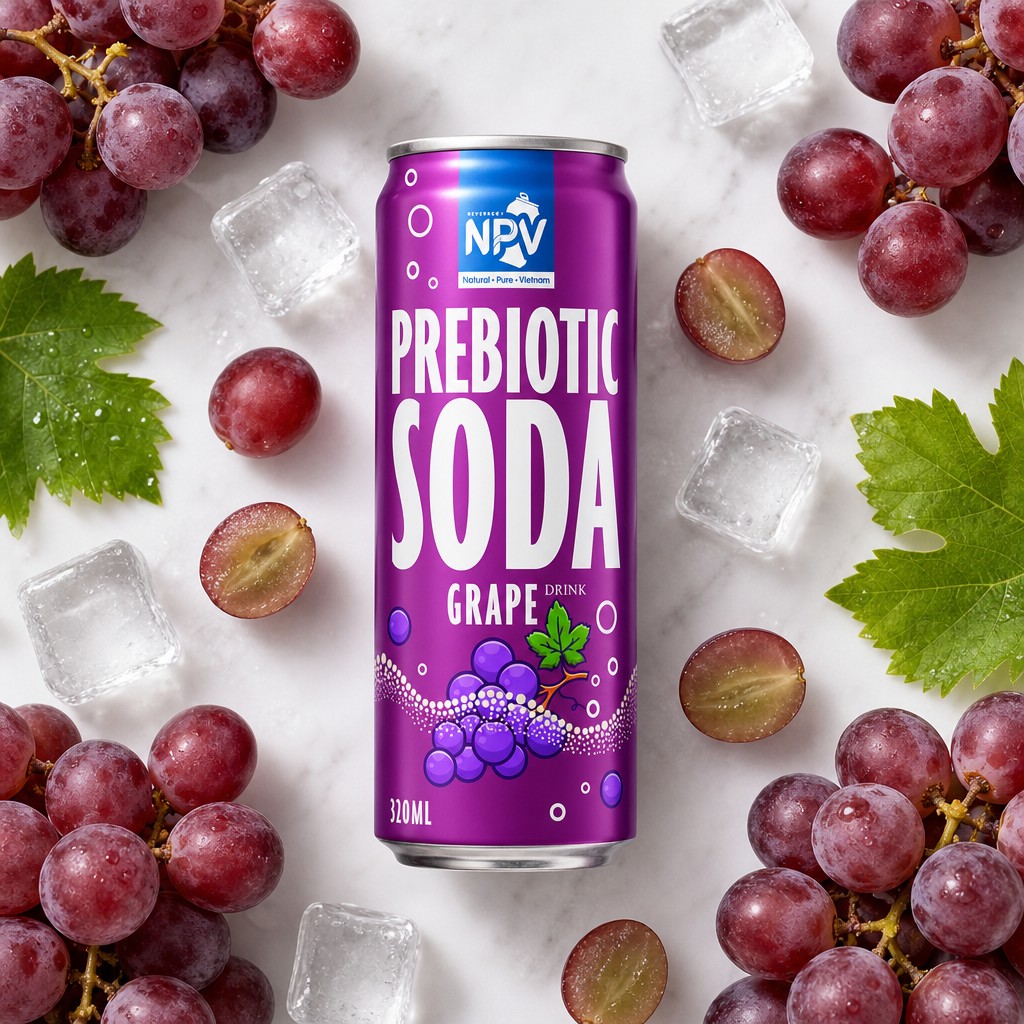
This includes adjusting sweetness levels, grape flavor intensity, and carbonation to meet local taste preferences and regulatory allowances. Crucially, NPV’s design team can develop custom can graphics and labeling that comply with each market’s specific font size, allergen declaration, and nutritional information requirements. This turnkey solution reduces the regulatory burden on brand owners, allowing them to focus on marketing and distribution. The company’s established ODM capabilities also mean it can guide clients on ingredient choices that are permissible and popular in target regions.
Market-Ready Features for Global Distribution
Beyond formulation, the product is designed for operational efficiency. The 12-month shelf life ensures stability during extended ocean freight and distribution within large markets. The durable can construction withstands the rigors of global shipping. NPV’s experience in coordinating pallet arrangements and documentation for over 200 territories helps streamline the complex customs and import clearance processes that can delay product launches.
The rise of e-commerce for beverages also demands packaging that can survive last-mile delivery. The compact and resilient nature of the 320ml can makes it particularly suitable for this growing sales channel, meeting the expectations of modern consumers for convenient, direct-to-door options.
Strategic Positioning in the Functional Beverage Segment
The Sparkling Prebiotic Grape Drink is positioned at the intersection of several enduring market trends: the demand for familiar flavors like grape, the appeal of sparkling refreshment, and the interest in beverages with added ingredients perceived as contributing to overall wellness. Navigating the marketing claims around such attributes requires careful legal review to avoid violating regulations on health and nutrient claims.
NPV’s approach provides a neutral, science-backed formulation that meets the technical definitions for “low calorie” and includes a generally recognized prebiotic ingredient. This allows brand partners to market the drink effectively within permissible bounds, appealing to health-conscious consumers in gyms, retail chains, and convenience stores without crossing regulatory red lines.
Frequently Asked Questions
What key certifications does the Sparkling Prebiotic Grape Drink hold for export?
The product is manufactured in facilities holding BRC, FSSC 22000, ISO, GMP, HACCP, SMETA, as well as Halal (Jakim and HCA-GCC) and Kosher certifications, making it suitable for a vast array of global markets.
Can the product’s sweetness or calorie content be adjusted for different markets?
Yes, through NPV’s OEM/ODM services, partners can request modifications to the sweetness level, flavor intensity, and formulation to align with local taste preferences and regulatory standards for calorie and sugar content.
Why is the 320ml aluminum can chosen as the packaging format?
This format offers a balance of consumer convenience, portability, and excellent product preservation. It is also highly recyclable, aligning with global sustainability initiatives and packaging waste regulations.
Is the prebiotic ingredient in the drink approved in major markets like the EU and USA?
NPV formulates with ingredients that have a history of safe use and are generally recognized as permissible within key regulatory frameworks. Specific ingredient details and compliance documents are available for B2B partners to review for their target markets.