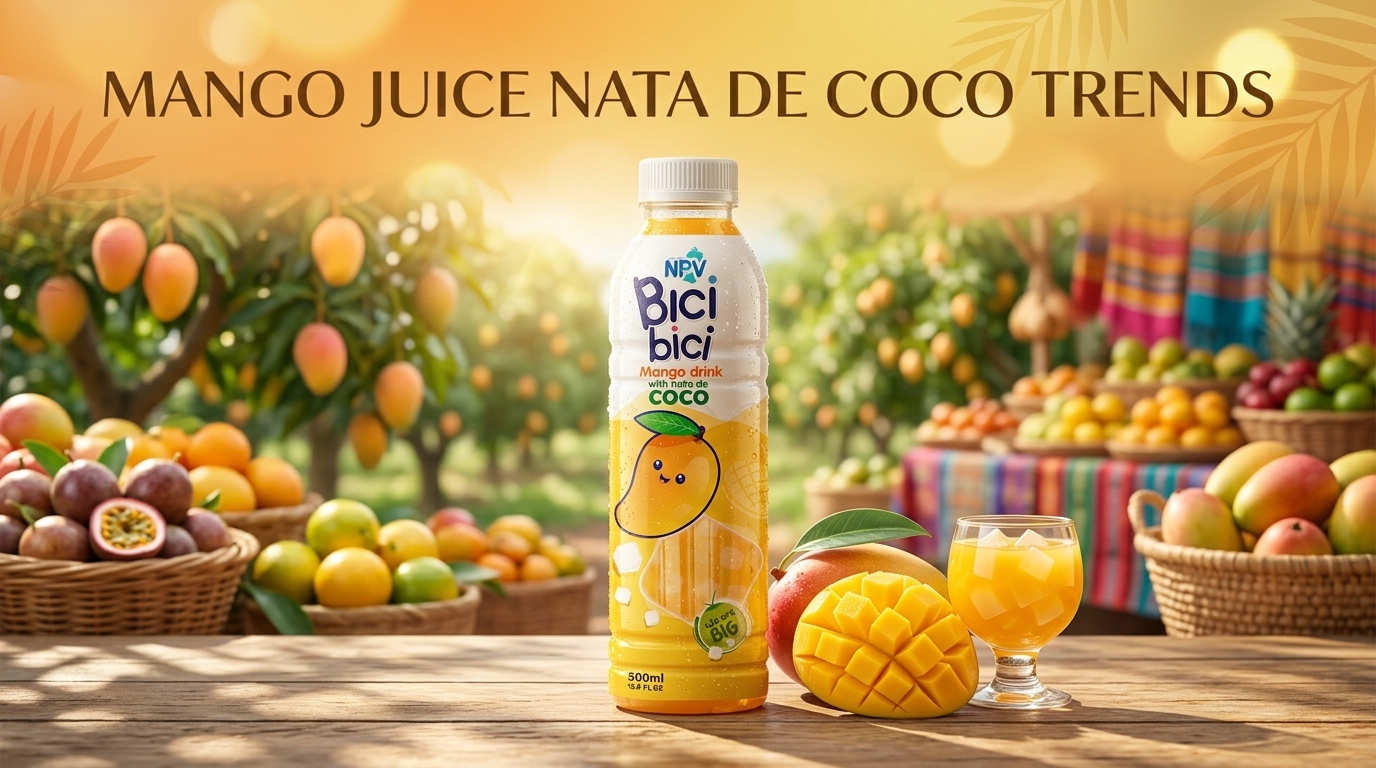
The global beverage industry is witnessing a significant shift toward textured, tropical, and ready-to-drink products that offer a unique sensory experience. Among the most dynamic segments is the mango fruit juice with nata de coco category, which combines the rich sweetness of mango with the chewy texture of coconut gel. For importers, distributors, and wholesalers in the USA and Europe, understanding the market dynamics behind this product type is essential for capitalizing on growing consumer demand. This article provides an in-depth analysis of market trends, consumer preferences, and strategic sourcing opportunities, using the NPV Bici Bici Mango Fruit Juice with Nata de Coco 500ml PET Bottle as a representative example of the category.
Key Takeaways
- The mango fruit juice with nata de coco segment is expanding rapidly in the USA and Europe, driven by demand for drinkable snacks and exotic flavors.
- Importers should prioritize suppliers offering OEM and private label solutions to adapt products to local taste preferences and regulatory requirements.
- The 500ml PET bottle format is ideal for on-the-go consumption, convenience stores, and supermarket shelves in Western markets.
- Sourcing from Vietnam-based manufacturers like NPV provides cost advantages, high production capacity, and compliance with international certifications such as ISO, HACCP, and Halal.
- Strategic partnerships with beverage export logistics specialists ensure timely delivery and quality consistency for bulk orders.
Understanding the Rise of Mango Fruit Juice with Nata de Coco in Global Markets
Mango has long been celebrated as the “King of Fruits” in tropical regions, but its popularity in the USA and Europe has surged in recent years. According to industry reports, mango-flavored beverages account for a growing share of the tropical fruit juice segment, with consumers increasingly seeking authentic, high-quality options. The addition of nata de coco—a chewy, translucent coconut gel—elevates the drinking experience, transforming a simple juice into a textured, snack-like product. This aligns with the broader trend of “drinkable snacks,” where consumers expect more than just hydration from their beverages.
For importers and distributors, the mango fruit juice with nata de coco category offers a compelling opportunity to differentiate their portfolios. Unlike traditional fruit juices, this product appeals to multiple demographics: young adults looking for fun, Instagram-worthy drinks; health-conscious consumers who appreciate natural ingredients; and ethnic communities familiar with nata de coco from Asian cuisine. The 500ml PET bottle format, as seen in the NPV Bici Bici product, is particularly well-suited for convenience stores, vending machines, and on-the-go consumption in urban environments.
Market Analysis: USA and Europe as Prime Destinations for Tropical Juice Imports
The United States and Europe represent two of the largest markets for imported tropical fruit juices. In the USA, the demand for mango-based beverages has grown steadily, driven by the increasing Hispanic and Asian populations, as well as the mainstream appeal of exotic flavors. Similarly, European consumers, particularly in the UK, Germany, and France, are embracing tropical tastes as part of a broader culinary exploration. The mango fruit juice with nata de coco fits seamlessly into these markets due to its familiar yet novel profile.
One key advantage for importers is the year-round availability of mangoes from Vietnam and other Southeast Asian countries, ensuring consistent supply. The NPV Bici Bici Mango drink, for instance, uses real mango juice and premium nata de coco, avoiding artificial flavors that often deter discerning Western consumers. This authenticity is crucial for building brand loyalty in competitive retail environments.
Moreover, the 500ml PET bottle is lightweight and shatterproof, reducing shipping costs and minimizing damage during transit. For bulk beverage supply, this format is highly efficient. Importers can leverage Vietnam’s robust beverage export infrastructure to source large quantities at competitive prices, as demonstrated by NPV’s production capacity and international certifications.
Consumer Trends Driving the Textured Beverage Boom
The global textured beverage market is projected to grow at a CAGR of over 8% through the next decade, with nata de coco drinks leading the charge. In the USA, products like bubble tea have already familiarized consumers with chewy toppings, creating a ready market for nata de coco in juices. European consumers, while newer to the trend, are increasingly drawn to the novelty and sensory appeal. The mango fruit juice with nata de coco offers a bridge between familiarity and adventure, making it an easy sell for distributors targeting mainstream and specialty retailers alike.
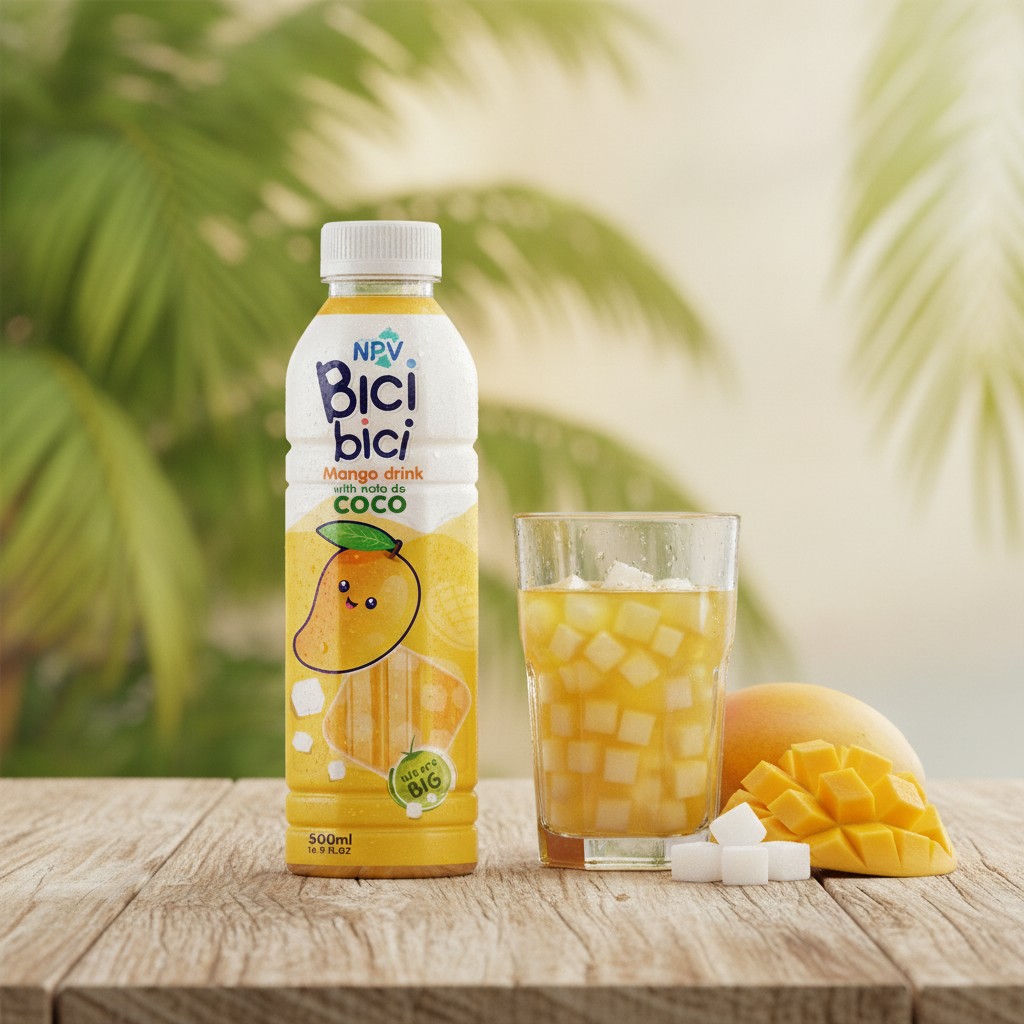
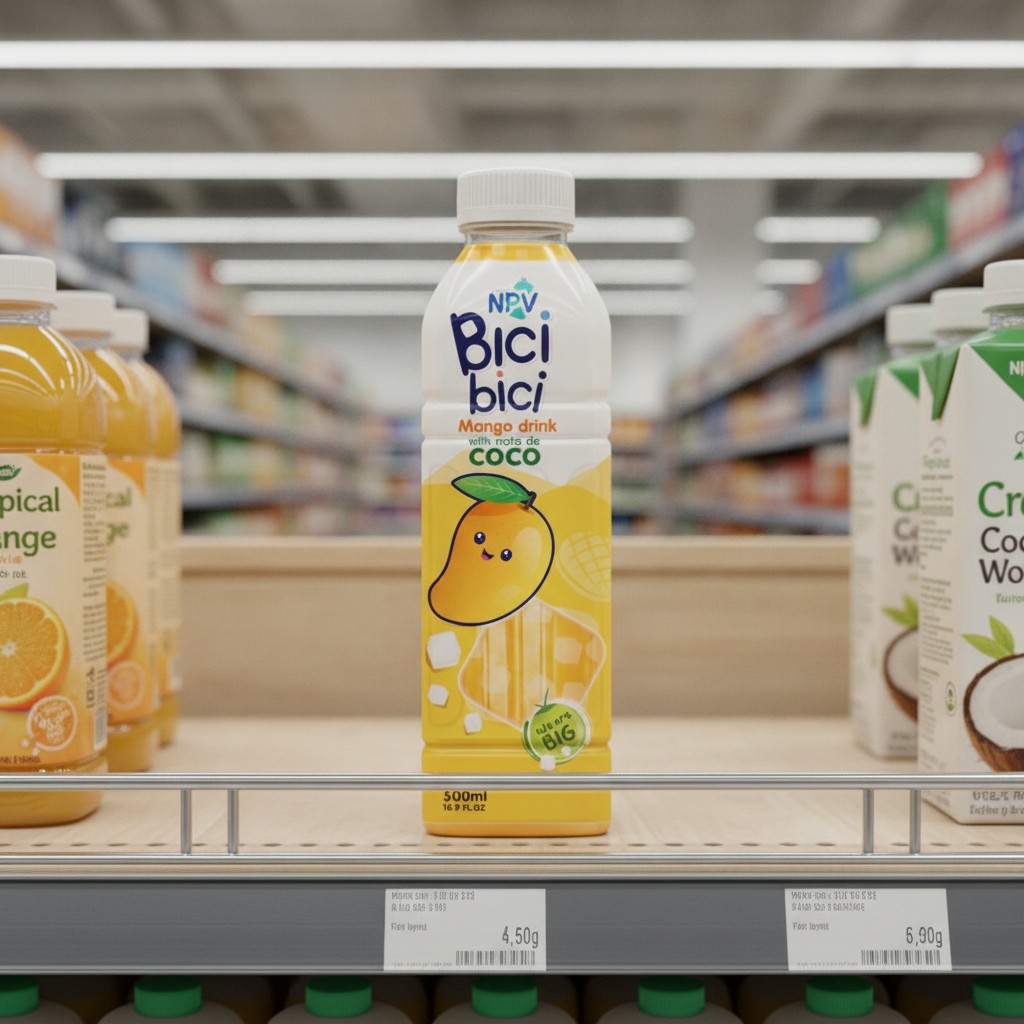
Importers should also note the importance of packaging design. The NPV Bici Bici bottle features a vibrant golden-yellow label that communicates the tropical flavor instantly. High-shelf appeal is critical for impulse purchases in supermarkets and convenience stores. Additionally, private label options allow brands to customize the label, brix level, and even the ratio of juice to nata de coco to match local preferences.
Strategic Sourcing: Why Vietnam is a Leading OEM Beverage Manufacturer for Nata de Coco Drinks
Vietnam has emerged as a global hub for fruit juice manufacturing, thanks to its abundant tropical fruit resources, advanced production facilities, and competitive labor costs. Companies like NPV operate state-of-the-art factories with ISO, HACCP, and Halal certifications, ensuring that products meet the stringent safety standards of Western markets. For importers seeking a reliable mango fruit juice with nata de coco supplier, Vietnam offers unparalleled advantages.
NPV’s production capacity allows for large-scale bulk orders, with flexible MOQs that accommodate both established distributors and startups. Their OEM and private label services cover everything from custom formulation to packaging design, enabling brands to launch their own line of nata de coco drinks without significant upfront investment. This turnkey solution is particularly attractive for importers in the USA and Europe who want to test the market before committing to large volumes.
Furthermore, NPV’s expertise in beverage export logistics ensures smooth shipping and documentation, reducing the administrative burden for international buyers. With a dedicated export team, they handle customs clearance, labeling compliance, and quality control, providing end-to-end support. This makes them a strategic partner for wholesalers looking to expand their tropical juice portfolio.
Product Specifications and Their Market Relevance
The NPV Bici Bici Mango drink contains real mango juice and nata de coco, with a 500ml volume that is ideal for single servings. The PET bottle has a shelf life of 12-18 months, depending on storage conditions, which is standard for aseptic-filled juices. The product’s brix level (typically around 10-12%) is calibrated to balance sweetness without being cloying, appealing to Western palates. Importers can request adjustments to brix, acidity, and fruit content through private label agreements.
The packaging also includes clear nutritional labeling, which is mandatory in both the USA (FDA) and Europe (EU regulations). The absence of artificial colors and preservatives aligns with the clean-label trend that dominates these markets. For distributors targeting health-focused retailers, this transparency is a significant selling point.
Private Label and OEM Opportunities for Importers in the USA and Europe
One of the most lucrative avenues for importers is leveraging private label manufacturing to create their own brand of mango fruit juice with nata de coco. This approach allows businesses to control pricing, branding, and distribution while benefiting from the manufacturer’s production expertise. NPV’s private label services include custom bottle shapes, label design, and even flavor tweaks, such as adding other tropical fruits like passion fruit or pineapple.
For example, a distributor targeting the US market might launch a brand called “Tropical Bliss” featuring the same base formula as NPV Bici Bici but with a label tailored to American consumers. Similarly, a European importer could emphasize the product’s exotic origin and natural ingredients to appeal to premium retailers. The flexibility of OEM manufacturing ensures that importers can differentiate their offerings in crowded markets.
Additionally, NPV supports market entry with insights on regional taste preferences. In the USA, for instance, consumers tend to prefer sweeter drinks, while European buyers may opt for lower sugar content. By partnering with an experienced OEM beverage manufacturer, importers can fine-tune their products to maximize shelf performance.
Export Logistics and Quality Assurance for Bulk Beverage Supply
[IMAGE_3]
Successful importation of tropical fruit juices requires robust logistics and quality assurance. NPV’s beverage export logistics team manages the entire supply chain, from production to port delivery. They handle documentation such as certificates of origin, phytosanitary certificates, and FDA prior notice for US shipments. For European importers, compliance with EU food safety regulations, including traceability and packaging waste directives, is ensured.
Quality control is maintained through regular testing for microbial contaminants, heavy metals, and pesticide residues. NPV’s HACCP and ISO certifications provide additional assurance. The 500ml PET bottles are packed in sturdy cartons suitable for palletization, minimizing damage during ocean freight. For bulk orders, container loading is optimized to maximize volume while maintaining product integrity.
Importers should also consider the seasonality of mango production. While Vietnam produces mangoes year-round, peak season runs from March to June. Planning orders in advance ensures competitive pricing and availability. NPV’s large storage capacity allows for buffer stocks, reducing lead times for urgent orders.
Regulatory Considerations for US and European Markets
Both the USA and Europe have strict labeling requirements for imported beverages. In the US, the FDA mandates that ingredients be listed in descending order of predominance, with added sugars clearly stated. NPV’s product labels are designed to comply with these rules, including a Nutrition Facts panel. For Europe, the EU’s Food Information to Consumers (FIC) regulation requires similar disclosures, plus country of origin labeling for certain ingredients.
Importers must also ensure that the nata de coco used is produced under hygienic conditions and free from unauthorized additives. NPV sources its nata de coco from certified suppliers, maintaining a cold chain where necessary. By working with a reputable manufacturer like NPV, importers can mitigate regulatory risks and avoid costly delays at customs.
Future Outlook: Scaling Your Business with Mango Juice and Nata de Coco
The mango fruit juice with nata de coco category is poised for sustained growth, driven by consumer demand for experiential beverages and the expansion of Asian food culture in Western markets. For importers and distributors, the key to success lies in choosing the right supplier, understanding local regulations, and differentiating through branding. Vietnam’s beverage industry, with its competitive pricing and high-quality output, offers a compelling sourcing destination.
NPV’s commitment to innovation and customization makes them an ideal partner for businesses looking to enter or expand in this segment. Whether through bulk supply of their existing Bici Bici product or through private label development, importers can leverage NPV’s expertise to capture market share. As the trend toward textured, tropical drinks continues, early movers will benefit from first-mover advantage in their respective territories.
In conclusion, the mango fruit juice with nata de coco represents a strategic opportunity for importers in the USA and Europe. By understanding market trends, leveraging OEM capabilities, and ensuring regulatory compliance, businesses can build a profitable and sustainable import business. The time to act is now, as consumer interest in exotic, textured beverages shows no signs of slowing down.
Frequently Asked Questions
What is the typical shelf life of mango fruit juice with nata de coco in a 500ml PET bottle?
The shelf life typically ranges from 12 to 18 months when stored in a cool, dry place away from direct sunlight. The aseptic filling process used by manufacturers like NPV ensures product stability without preservatives.
Can importers customize the brix level or fruit content in private label orders?
Yes, most OEM manufacturers, including NPV, offer formulation adjustments such as brix level, acidity, and fruit juice concentration to meet the taste preferences of target markets. This is a standard part of private label services.
What certifications should importers look for when sourcing mango juice with nata de coco from Vietnam?
Key certifications include ISO 22000, HACCP, Halal, and sometimes BRC or FSSC 22000 for higher-tier retailers. These ensure food safety, quality control, and compliance with international standards.
What is the minimum order quantity (MOQ) for bulk supply of 500ml PET bottle juice?
MOQs vary by manufacturer but typically start at around 1,000 to 2,000 cartons (12-24 bottles per carton). NPV offers flexible MOQs to accommodate both trial orders and large-scale distribution.
How can importers ensure the product complies with FDA labeling requirements for the US market?
Importers should work with manufacturers that provide full labeling support, including Nutrition Facts panels, ingredient lists, and allergen declarations. NPV’s export team ensures all documentation meets FDA and EU standards.