
The global sparkling beverage market is entering a period of heightened regulatory scrutiny, and manufacturers exporting carbonated drinks must navigate an increasingly complex web of food safety standards, labeling requirements, and certification frameworks. As importers across Asia, Europe, the Americas, the Middle East, Africa, and Oceania tighten compliance checks, the ability to demonstrate internationally recognized certifications has become a decisive competitive factor for B2B beverage suppliers. The NPV Soda Water 325ml Can represents how Vietnamese manufacturers are responding to this shift, combining a zero-calorie carbonated formula with a portfolio of globally respected credentials designed to clear customs and retail audits with minimal friction.
Key Takeaways
- Regulatory compliance is now a primary differentiator in the global carbonated beverage trade.
- Certifications such as BRC, FSSC 22000, HACCP, Halal, and Kosher unlock access to over 200 export markets.
- Zero-calorie sodas align with consumer demand for lighter refreshment options worldwide.
- Private label and OEM programs let importers adapt packaging and formulations to local rules.
- A 24-month shelf life supports long-distance shipping under evolving cold-chain and storage regulations.
Regulatory Landscape Reshaping Carbonated Drink Exports
Food safety authorities from the European Food Safety Authority to the U.S. FDA and Gulf Standards bodies have expanded their oversight of imported carbonated beverages in recent years. Documentation requirements now extend beyond basic ingredient lists to include full traceability records, allergen declarations, and evidence of Hazard Analysis and Critical Control Point implementation at the manufacturing site.
For exporters, this means a single missing certificate can delay containers at port or trigger costly re-inspection. The NPV Soda Water 325ml Can is manufactured under BRC, FSSC 22000, ISO, GMP, HACCP, SMETA, Halal Jakim, Halal HCA-GCC, and Kosher certifications, giving buyers a ready-made compliance dossier that satisfies the majority of destination-market checklists.
Halal certification deserves particular attention as demand grows across the Middle East and Southeast Asia. Dual Halal credentials from Jakim and the GCC HCA mean the product can be distributed in both Malaysian and Gulf Cooperation Council markets without requiring separate production runs, simplifying supply chain planning for regional distributors.
How Certification Stacks Compare Across Markets
Different regions prioritize different standards, and understanding this matrix helps importers choose the right manufacturing partner. The table below illustrates how a fully certified soda water SKU stacks up against typical export requirements.
| Market Region | Key Required Certifications | NPV Soda Water Coverage |
|---|---|---|
| Europe | BRC, FSSC 22000, ISO 22000 | Fully covered |
| Middle East | Halal (Jakim / GCC HCA) | Fully covered |
| North America | HACCP, GMP, FDA facility registration | HACCP, GMP covered |
| Asia-Pacific | ISO 22000, Halal, local labeling | Fully covered |
| Africa | HACCP, Codex-aligned labeling | Fully covered |
Source: NPV Beverage certification portfolio, npvbeverage.com.vn
The breadth of this coverage matters because multi-market importers increasingly seek a single supplier capable of serving several regions from one production base. Consolidating orders reduces freight overhead and simplifies quality audits.
Product Formulation and Packaging Under Compliance Pressure
Regulatory bodies are paying closer attention to sweetener declarations and portion labeling on carbonated beverages. The NPV Soda Water formula uses a blend of sucralose and acesulfame potassium alongside citric acid and natural fruit flavor, delivering a crisp, effervescent taste profile with zero calories per 325ml serving. Every ingredient is declared clearly on-pack to meet EU Regulation 1169/2011, GCC labeling rules, and Codex Alimentarius guidelines simultaneously.
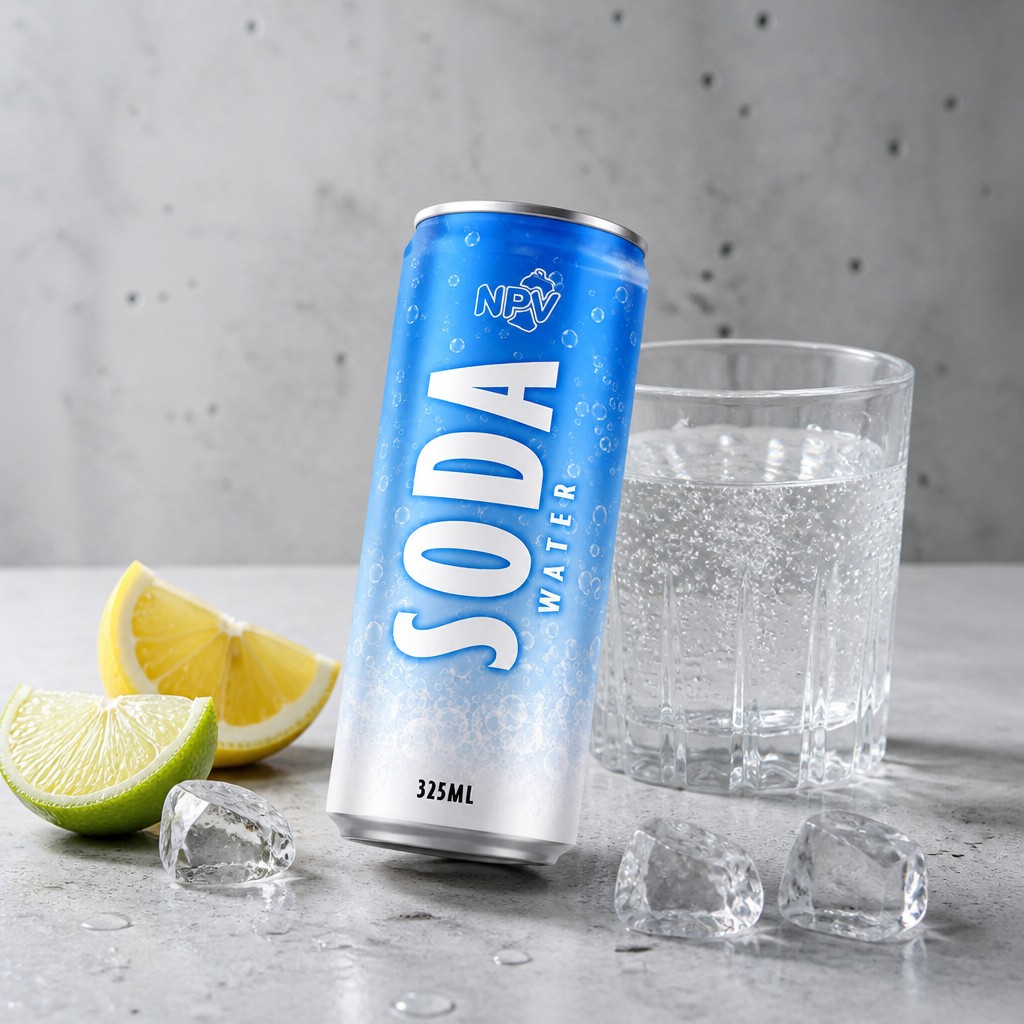
Packaging itself is a compliance instrument. The 325ml sleek aluminum can features a blue-to-white gradient with realistic bubble motifs, a silver metallic rim, and vertical typographic design that communicates effervescence at a glance. Aluminum is infinitely recyclable, which aligns with extended producer responsibility schemes emerging in the European Union and parts of Oceania.
Shelf Life and Storage as Regulatory Considerations
A 24-month shelf life is more than a commercial advantage. It gives importers buffer time to clear customs inspections, warehouse stock through seasonal demand peaks, and rotate inventory without triggering write-offs linked to expiry-date non-compliance in retail contracts.
- Zero calories per 325ml serving supports front-of-pack labeling claims permitted in most jurisdictions.
- Compact single-serve format fits standard vending machines and cooler displays without adaptation.
- Aluminum construction withstands pressure variations during air and sea freight.
- Batch coding and traceability markers printed on the can base facilitate recall readiness.
These attributes collectively reduce the compliance burden on downstream distributors, who often bear responsibility for in-market label accuracy and storage condition documentation.
From Our Orchards to the Can, Raw Material Sourcing and Quality Assurance
While soda water relies primarily on purified water and carbonation, the broader NPV Beverage portfolio draws on Vietnamese agricultural inputs, and the company maintains rigorous sourcing partnerships to ensure consistency across its range of fruit juices, coconut waters, and aloe vera drinks. Transparent sourcing underpins the traceability records that regulators increasingly demand.
For buyers exploring complementary SKUs, the coconut water range from NPV Beverage showcases how farm-level quality controls translate into export-ready finished goods.
The company’s sourcing strategy in the Mekong Delta region exemplifies this commitment to raw material integrity, as documented in the Mekong Delta as a high-quality raw ingredients area, a reference frequently cited by industry partners evaluating Vietnamese supply chains.
Private Label Opportunities Amid Tightening Rules
Regulatory complexity has paradoxically strengthened the case for OEM and ODM partnerships. Importers who attempt to formulate and package carbonated beverages domestically face the full weight of local certification requirements, whereas sourcing a pre-certified product from an established manufacturer transfers much of that burden upstream.
The NPV Soda Water 325ml Can is available for private label customization, allowing buyers to apply their own brand artwork, adjust sweetener systems to meet local taste preferences, and select language variants for multi-country distribution. Experienced partners in this space, such as RITA with its established OEM service capability, demonstrate how Vietnamese manufacturers have scaled custom formulation programs to serve importers across dozens of markets.
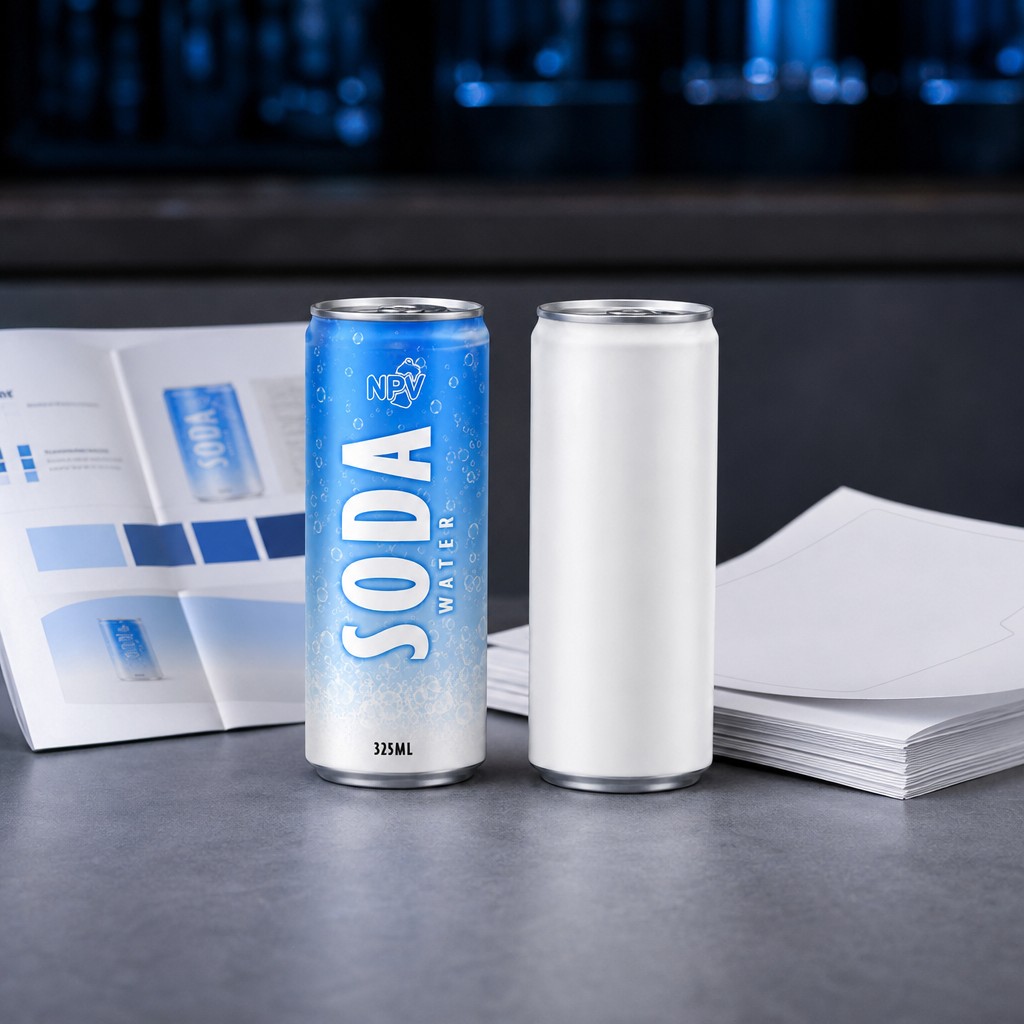
For beverage businesses exploring broader carbonated portfolios, the carbonated drink catalog at NPV Beverage offers additional flavor profiles and package formats that can be bundled into consolidated shipments, further optimizing freight economics under rising logistics costs.
Documentation Packages Buyers Should Request
Savvy importers now treat supplier documentation as a due diligence checklist rather than an afterthought. When evaluating a soda water export partner, the following materials should be confirmed before contract signing:
- Current BRC and FSSC 22000 audit reports with scope covering carbonated beverages.
- Halal and Kosher certificates with validity periods extending beyond the first two purchase orders.
- Product specification sheets including sweetener concentrations and carbonation volumes.
- Sample labeling artwork pre-approved for the destination market’s language requirements.
- Batch traceability procedures documented in line with ISO 22000 clauses.
Requesting these documents early prevents the scenario where a container arrives at port only to be held pending supplementary paperwork, a risk that has grown as customs authorities digitize their verification processes.
Market Signals From the Wider Beverage Industry
Recent developments across the beverage sector underscore how quickly regulatory and commercial conditions can shift. Vita Coco raised its financial guidance again, signaling that coconut-based drinks continue to outperform expectations even as input costs fluctuate. Meanwhile, an antitrust case against Keurig Dr Pepper in the United States is proceeding to trial, a reminder that competition regulators are watching beverage markets as closely as food safety authorities.
On the spirits side, the founders of Quarter Proof have launched Demi, a mid-strength brand that reflects the broader industry movement toward moderated alcohol consumption, a trend mirrored in the zero-calorie soda category where consumers seek refreshment without excess calories. Indian tax officials’ visit to Allied Blenders further illustrates how fiscal policy can reshape beverage economics overnight, reinforcing the value of diversified, multi-market export strategies.
Even outside beverages, the Dutch retailer Albert Heijn’s resumption of online deliveries after a cyber outage highlights the operational resilience importers must build into their supply chains, from digital order systems to contingency warehousing plans.
Positioning Soda Water for Global Distribution
With exports reaching more than 200 countries and territories, NPV Beverage has structured its operations around the compliance expectations of the world’s most demanding markets. The soda water SKU benefits from this infrastructure: standardized batch records, third-party audited hygiene systems, and packaging lines validated for consistent carbonation levels.
For distributors evaluating entry into the sparkling water segment, the combination of a zero-calorie profile, universally recognized certifications, and a shelf-stable 24-month format presents a low-risk proposition. The product can sit in retail coolers, vending machines, and hotel minibar programs without requiring specialized storage, while its clean blue-to-white can design photographs well for e-commerce listings.
As regulatory expectations continue to tighten across every continent, manufacturers that treat compliance as a core product feature rather than an administrative afterthought will capture the largest share of import demand. The NPV Soda Water 325ml Can exemplifies this philosophy, pairing a straightforward, refreshing formula with the documentation and certifications that modern buyers require to move product confidently from factory to shelf.
Frequently Asked Questions
What certifications does NPV Soda Water 325ml Can hold for export?
NPV Soda Water is manufactured under BRC, FSSC 22000, ISO, GMP, HACCP, SMETA, Halal Jakim, Halal HCA-GCC, and Kosher certifications, supporting distribution in over 200 countries and territories.
What are the ingredients in NPV Soda Water 325ml Can?
The product contains water, carbonated water, natural fruit flavor, citric acid, sucralose, and acesulfame potassium, delivering a crisp carbonated taste with zero calories per 325ml serving.
How long is the shelf life of NPV Soda Water?
NPV Soda Water has a 24-month shelf life, making it suitable for long-distance shipping, extended retail display, and inventory rotation across global distribution networks.
Does NPV Beverage offer private label options for soda water?
Yes, NPV Beverage provides OEM and ODM services for the NPV Soda Water 325ml Can, allowing importers to customize formulations, sweetener systems, and packaging artwork for specific regional markets.
Which markets can import NPV Soda Water under current certifications?
The product’s certification portfolio covers requirements across Europe, the Middle East, Asia-Pacific, the Americas, Africa, and Oceania, including dual Halal credentials for Malaysian and GCC markets.