
There are fruits that exist quietly within their native regions for generations, known and loved by those who grew up with them, yet almost invisible to the rest of the world. Then something shifts — a trade route opens, a food trend ignites, a curious consumer reaches for something unfamiliar on a shelf — and suddenly that fruit finds itself at the center of a global conversation. Soursop is exactly that kind of fruit. Long celebrated across tropical Asia, Latin America, and the Caribbean, soursop is now capturing the attention of food and beverage markets far beyond its origins. At NPV Beverage, we have taken this remarkable tropical fruit and turned it into something ready for the world: the NPV Soursop Juice Drink, a 330ml canned beverage that brings one of Southeast Asia’s most distinctive flavors to consumers everywhere.
Key Takeaways
- Soursop is a tropical fruit native to Southeast Asia, Latin America, and the Caribbean, known for its uniquely layered sweet-tart flavor and intensely aromatic profile — a genuine novelty for most international consumers.
- The flavor of soursop — creamy, floral, tropical, and complex — stands completely on its own in a single-flavor juice drink, making it one of the most commercially compelling exotic fruit flavors available to the global beverage market today.
- Soursop is gaining momentum across the Middle East, Europe, Latin America, and North America as consumer curiosity about tropical flavors continues to drive growth in the exotic juice category.
- Vietnamese soursop is known for its balanced, aromatic flavor profile, and NPV’s access to established local growing networks gives our product a credible, traceable origin story that resonates with international buyers.
- The NPV Soursop Juice Drink comes in a 330ml aluminum can — a single-serve, export-ready format with a 24-month shelf life, ideal for long-distance international distribution.
- Available for OEM and ODM production, the product can be customized for private label partners looking to add a standout exotic tropical juice to their portfolio.
Soursop: A Fruit Unlike Anything Else
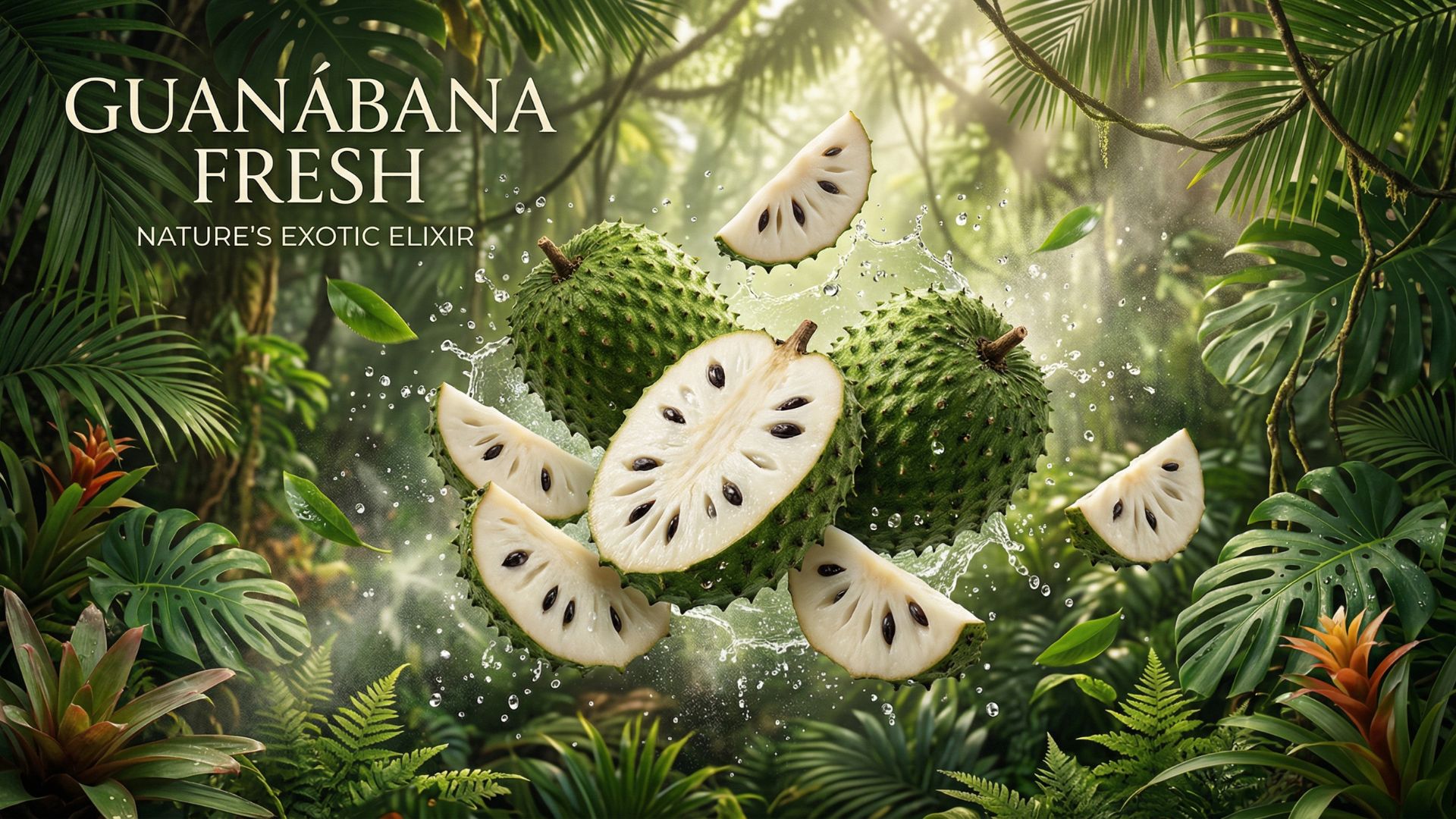
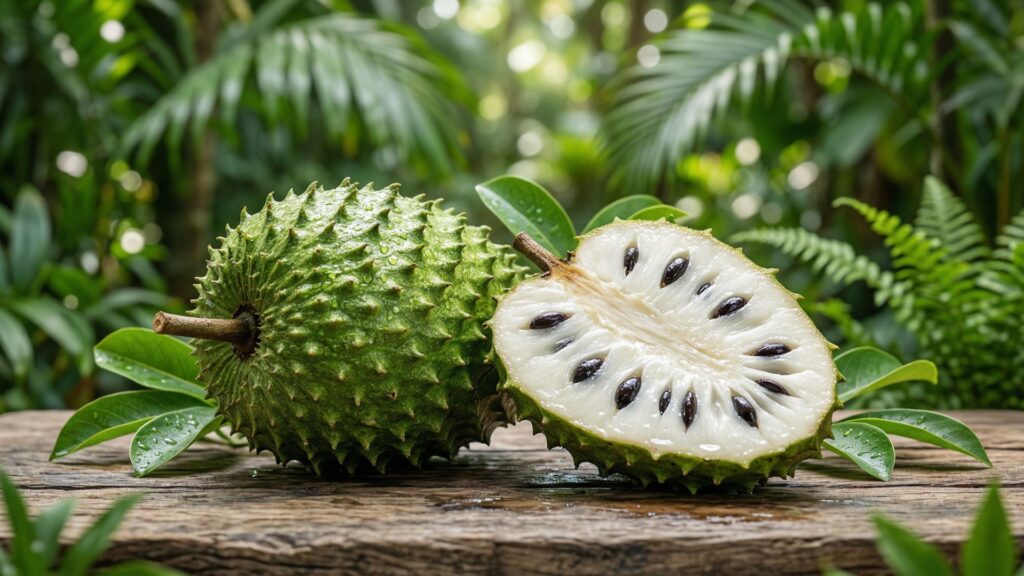
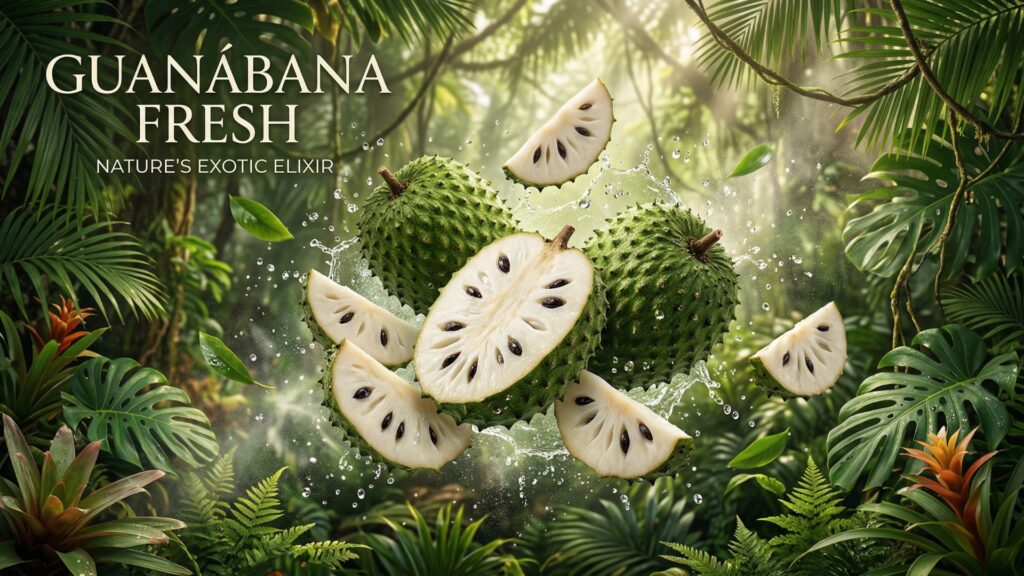
To understand what makes the NPV Soursop Juice Drink so compelling, you first need to understand the fruit itself — because soursop is genuinely unlike anything most consumers in Western markets have encountered before. Known by many names across its native range — graviola in Brazil, guanabana in Latin America, mang cau xiem in Vietnam — soursop (Annona muricata) is a large, irregularly shaped fruit with a deep green exterior covered in soft, curved spines. Cut it open and the contrast is immediate: inside lies a soft, snow-white pulp, creamy in texture and intensely aromatic.
What makes soursop so memorable is its flavor — a combination that is difficult to describe and impossible to forget once experienced. The taste is a layered blend of sweet and tart, with the creaminess of banana meeting the tang of pineapple, undercut by something floral and distinctly tropical that sits in the background like a warm afternoon in a rainforest. Some describe notes of strawberry or citrus in certain varieties. Others focus on the rich, almost custard-like quality of the ripe flesh. What everyone agrees on is that soursop tastes like nothing else — and in a global beverage market where genuine novelty is rare, that singularity is an enormous commercial asset.
The fruit grows on the Annona muricata tree, a medium-sized tropical tree that thrives in warm, humid climates with well-drained soil. It is widely cultivated across Southeast Asia, Central America, the Caribbean, and parts of sub-Saharan Africa. In Vietnam, soursop is grown across several regions in the south and central highlands, where the climate supports the fruit’s preference for consistent warmth and rainfall. Vietnamese soursop is known for its balanced flavor profile — sweet enough to be immediately appealing, with enough natural acidity to give the juice a bright, lively character.
What Does Soursop Taste Like? Understanding the Flavor Profile
For importers, distributors, and private label beverage brands evaluating the soursop category, the flavor profile is the first and most important consideration. Unlike familiar tropical flavors such as mango or pineapple — which most consumers already have a clear taste reference for — soursop requires a moment of discovery. That moment of discovery, however, is precisely what makes it so commercially interesting.
The dominant impression of ripe soursop is sweetness — a round, smooth sweetness with none of the sharpness of citrus and none of the heaviness of very ripe mango. Beneath that sweetness sits a gentle tartness, keeping the flavor fresh and preventing it from becoming cloying. The texture of fresh soursop pulp is exceptionally smooth and slightly fibrous, giving processed soursop juice a natural body that feels satisfying in the mouth without requiring any thickeners or additives.
The aromatic dimension of soursop is what truly sets it apart. When a can of soursop juice drink is opened, the fragrance that emerges is immediately tropical — floral, slightly musky, and unmistakably exotic. It is the kind of aroma that signals to the consumer that what they are about to drink is genuinely different from the fruit drinks they already know. In consumer research across multiple international markets, soursop consistently scores high on novelty and memorability — two qualities that are increasingly difficult to achieve in a crowded RTD fruit juice market.
Soursop’s flavor also has a remarkable quality for beverage development: it is distinctive enough to stand completely on its own as a single-flavor product, yet versatile enough to blend well with complementary fruits such as coconut, pineapple, lychee, or passionfruit. This makes it an ideal candidate for a range of tropical juice drink products, whether as a flagship single-origin flavor or as part of a broader fruit blend portfolio.
Soursop in Global Markets: From Regional Fruit to International Trend
The journey of soursop from local tropical fruit to globally traded beverage ingredient mirrors the broader story of how Southeast Asian food culture has expanded its influence over the past two decades. What was once available only in wet markets across Vietnam, Thailand, the Philippines, and Indonesia is now appearing on menus of tropical-themed restaurants in London, on the shelves of specialty grocery stores in Paris, and in the chiller cabinets of convenience stores across the Gulf region.
In Latin America and the Caribbean, soursop has always had a strong presence as a culinary ingredient — used in juices, smoothies, ice creams, and traditional drinks. The existing cultural familiarity in these markets means soursop juice drinks face very low barriers to entry and can position immediately as an authentic tropical product rather than a novelty.
In the Middle East — one of the most active import markets for tropical fruit beverages globally — soursop’s exotic appeal and unfamiliar flavor profile work strongly in its favor. Consumers in this region have demonstrated consistent willingness to try new tropical flavors, and a product that combines an intriguing appearance, an aromatic profile, and a genuinely different taste is well positioned to generate strong impulse purchase.
In European and North American markets, soursop sits squarely within the exotic tropical juice trend that has been building momentum for several years. Premium grocery retailers, specialty food stores, and international aisle supermarket sections have all expanded their tropical juice offerings, driven by consumer curiosity and the influence of travel, international cuisine, and social media food culture. Canned soursop juice from a credible Southeast Asian producer represents exactly the kind of product these buyers are actively looking for.
Soursop in Vietnam: A Fruit With Deep Roots
In Vietnam, soursop — known locally as mang cau xiem — is far more than an exotic curiosity. It is a fruit with deep cultural roots, grown across the southern provinces and central highlands where the climate is ideally suited to its cultivation. Vietnamese soursop orchards produce fruit throughout much of the year, providing a relatively consistent raw material supply compared to more seasonally restricted tropical fruits.
The flavor of Vietnamese soursop is particularly well regarded within the regional market. Grown in the warm, humid conditions of southern Vietnam, the fruit develops a natural sweetness and aromatic intensity that translates directly into a soursop juice with a rich, full flavor profile. Local processing expertise in handling soursop — managing its delicate flesh, preserving its aroma through appropriate processing conditions, and maintaining color stability in the finished product — has developed over decades of domestic production, giving Vietnamese manufacturers a genuine technical advantage in producing high-quality soursop beverages for export.
At NPV Beverage, our access to Vietnamese soursop from established growing regions is a core part of what makes our Soursop Juice Drink competitive on the international stage. We source fruit from trusted supplier networks with the supply consistency and quality control that export-scale production requires.
Introducing the NPV Soursop Juice Drink 330ml
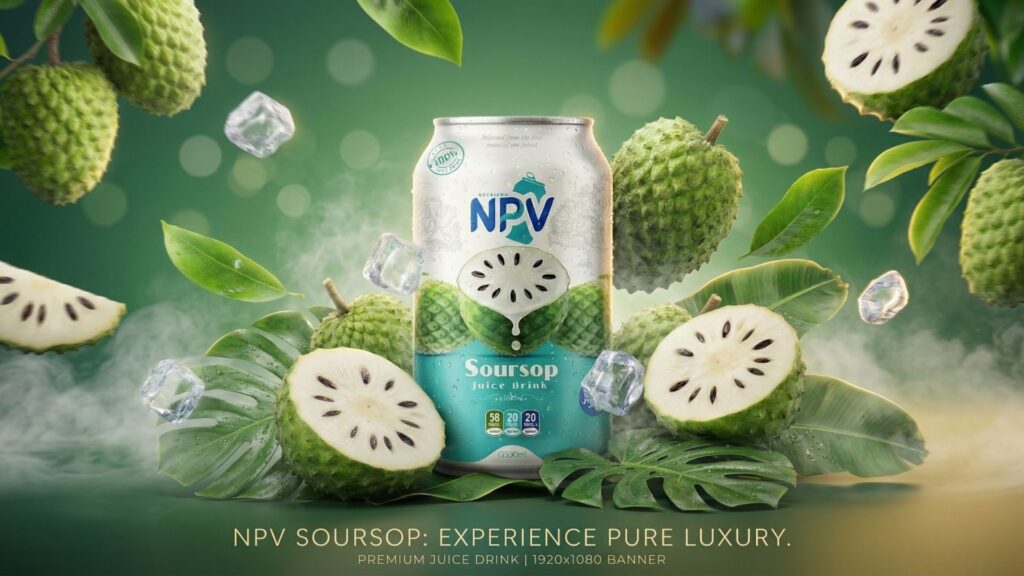
Everything that makes soursop such a compelling fruit — its distinctive aroma, its layered sweet-tart flavor, its creamy texture and tropical character — is what NPV has set out to capture and deliver in a format ready for global retail: the NPV Soursop Juice Drink, available in a 330ml aluminum can.
The product is designed with international consumers in mind. The 330ml single-serve format is the right size for an on-the-go consumption occasion — easy to carry, easy to chill, and perfectly portioned for a single sitting. The aluminum can protects the delicate aroma and flavor of soursop far more effectively than PET bottles, shielding the juice from light and oxygen over the full shelf life of the product. This matters particularly for a fruit like soursop, whose aromatic compounds are part of what makes the drinking experience so distinctive.
The packaging design reflects the fruit clearly and confidently: a clean white upper body sets a premium tone, transitioning into a bright teal base that evokes tropical freshness. The soursop fruit is illustrated in detail on the label, helping consumers who are new to the flavor understand exactly what they are choosing. The “Selected from the best fruits of our farm” message reinforces the sourcing story. The 100% natural callout and the Vitamin C badge complete a label that communicates quality without over-complicating the message.
For beverage importers and OEM/ODM partners, the NPV Soursop Juice Drink represents a product that is genuinely ready for international markets — differentiated by flavor, credible in its origin story, and produced by a manufacturer with the export experience and quality infrastructure to deliver consistently at scale. Whether as a branded NPV product or as the foundation for a private label soursop juice line, this is a product built for the global shelf.
Frequently Asked Questions
- What does soursop taste like for someone who has never tried it?
Soursop has a flavor that is genuinely difficult to compare to anything familiar. The closest description is a blend of creamy banana sweetness, pineapple tanginess, and a floral tropical aroma — all layered together in a way that feels smooth and refreshing. Most first-time tasters find it immediately appealing, which is one of the reasons it performs so well as a new flavor launch in international markets.
- Where is soursop grown and sourced for NPV’s product?
NPV sources soursop from established growing networks in southern Vietnam and the central highlands, where the tropical climate produces fruit with the balanced sweetness and aromatic intensity that translates best into a high-quality soursop juice drink. Incoming fruit is subject to quality inspection before processing.
- Is the NPV Soursop Juice Drink available for private label production?
Yes. NPV offers full OEM and ODM services for the Soursop Juice Drink. Partners can customize label design, can format, volume, and product formulation to match their brand identity and target market requirements.
- What is the shelf life of the product?
The NPV Soursop Juice Drink has a shelf life of 24 months from the production date for the aluminum can format, making it well-suited for long-distance international shipping and extended retail distribution timelines.
- What size and format does the product come in?
The current standard format is a 330ml aluminum can. Other formats and volumes are available based on partner requirements and target market specifications.
- Which markets is NPV targeting with the Soursop Juice Drink?
NPV sees strong commercial potential for the Soursop Juice Drink across the Middle East, Southeast Asia, Europe, and Latin America — markets where either existing familiarity with soursop or strong consumer appetite for exotic tropical flavors creates a clear product-market fit.
- How can we get product samples to evaluate?
Prospective partners and importers can contact the NPV sales team directly via our website or email to request product samples. We encourage buyers to taste the product firsthand before making any sourcing decisions.