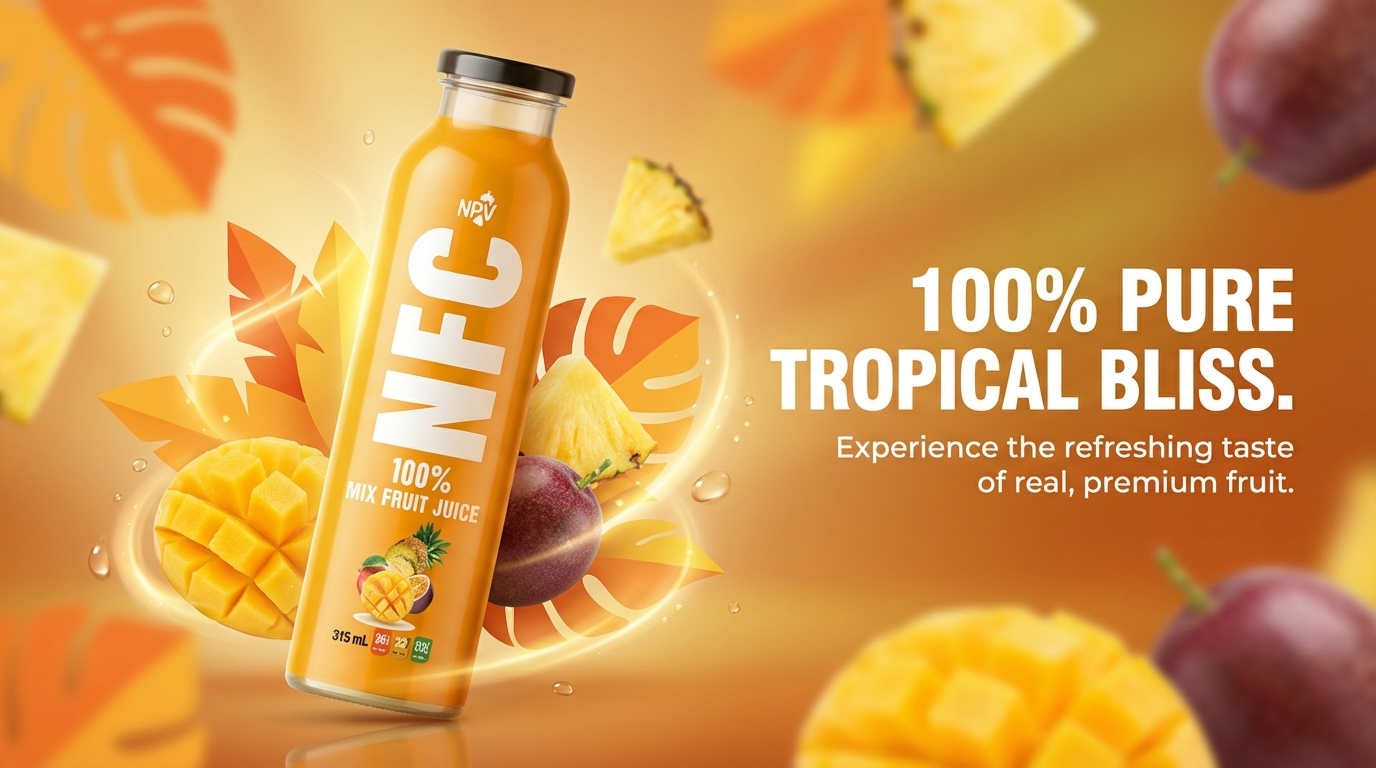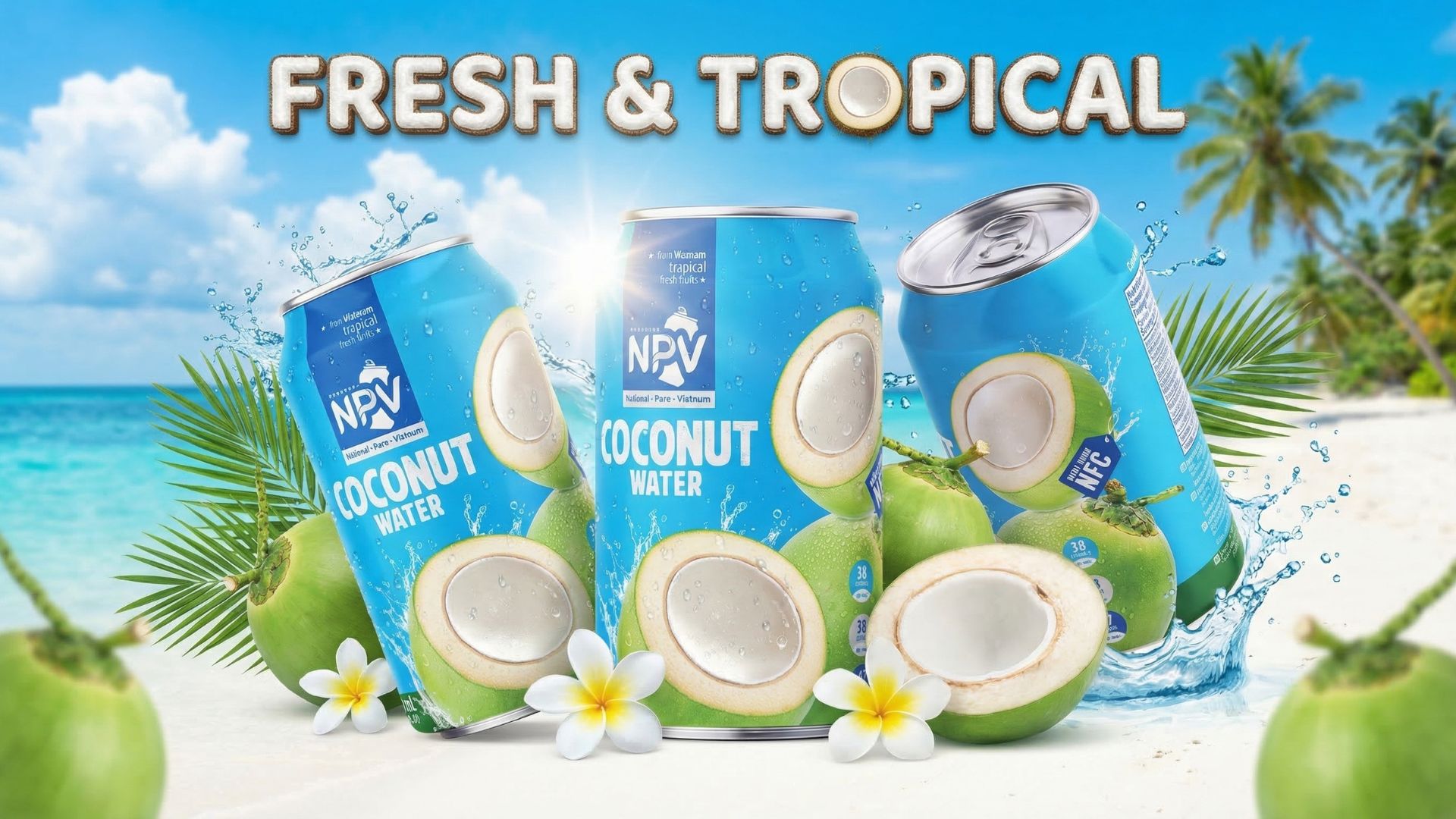


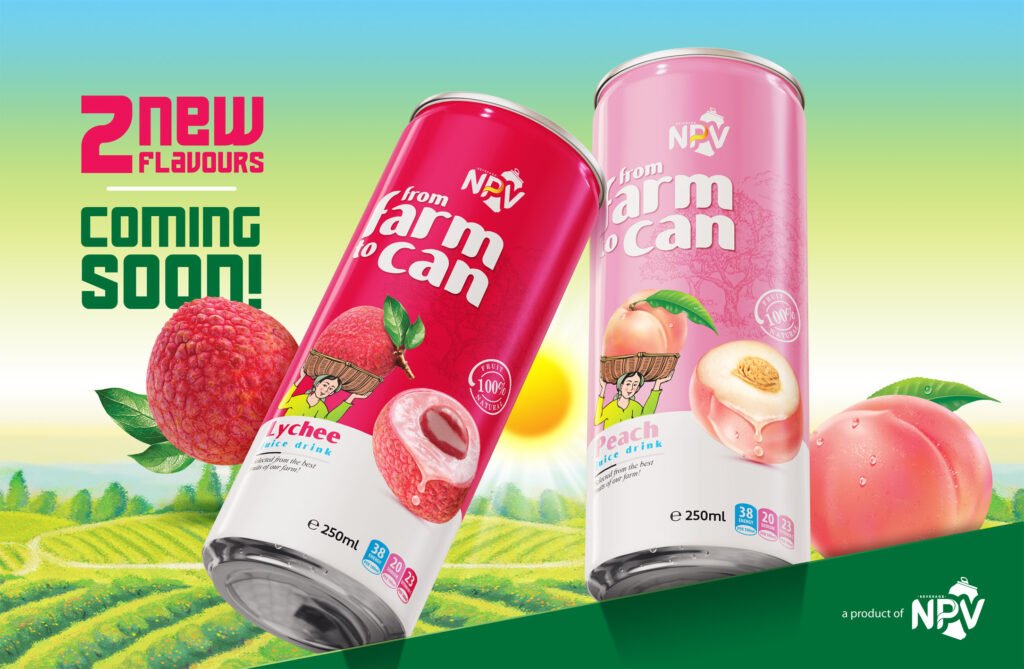
Behind every can or bottle that reaches an international shelf, there is a much longer story than a simple production line. It starts in orchards, passes through careful selection, and only then enters the factory. For global buyers, that story matters because it determines the one thing consumers never compromise on: consistent taste. At Nguyen Pham Viet Beverage Co., Ltd (NPV), the “from farm to can” approach is not a slogan—it is the operating system that keeps every batch stable, every shipment reliable, and every private label launch on track.
Vietnam’s fruit advantages are well known: tropical diversity, multiple harvest seasons, and strong aroma profiles. Yet the real challenge is turning those natural strengths into export-grade beverages year after year. NPV does this by controlling each step of the chain—raw material planning, intake grading, processing standards, formulation repeatability, and packaging durability—so a Fruit Juice produced today tastes the same as one produced six months later. This is why more buyers are choosing Vietnam Juice Manufacturer partners like NPV for scalable, modern beverage lines.
Key takeaways
- “From farm to can” at Nguyen Pham Viet Beverage Co., Ltd means structured control from sourcing to shipment
- NPV develops consistent Fruit Juice by standardizing fruit selection, intake grading, and processing
- Multi-season sourcing in Vietnam supports long-term flavor stability for export programs
- NPV’s OEM and ODM services help global brands launch quickly with stable quality
- Packaging design and logistics testing are part of NPV’s export-ready model
- The future of tropical beverages depends on discipline, traceability, and repeatable flavor systems
Why “From Farm to Can” Is the New Global Standard
The beverage market is moving fast. Consumers want tropical flavors, cleaner labels, and textured experiences. But they also want trust: every sip must match the promise. In this environment, “from farm to can” has become a global standard among serious manufacturers because it reduces the two biggest risks for buyers:
Ingredient inconsistency
When fruit is sourced through fragmented channels, taste changes from batch to batch. A mango drink can suddenly lean too sweet, a passion fruit blend can lose acidity, or guava aroma can fade. These shifts may look small in the factory, but they feel huge to consumers.
Supply instability
Even a great formula fails if supply collapses. Global importers cannot afford empty shelves because a fruit season ended unexpectedly or raw materials were bought too late at inflated prices.
NPV’s answer is to design raw ingredient control and manufacturing as one connected system, rather than two separate worlds.
Step One: Building a Fruit Map Instead of Buying Fruit Randomly
Many factories shop fruit based on what is available in the market. NPV builds a fruit map based on what performs best in beverages. That difference is key.
Regional selection for flavor performance
NPV evaluates fruits by beverage performance metrics, not only by appearance. The company uses local sourcing knowledge to identify zones where fruits produce:
- stable sweetness
- predictable acidity
- strong aroma after heat treatment
- pulp textures suitable for Fruit Juice with or without inclusions
This is especially important for products like tropical blends and textured lines where fruit identity must stay clear after processing.

Multi-season planning
Vietnam’s advantage is multi-harvest capability. NPV uses that advantage to plan supply months ahead. For buyers, this means fewer surprises and a more reliable annual production rhythm.
Long-term farmer and supplier relationships
NPV prioritizes stable partnerships instead of switching suppliers for short-term price wins. This keeps fruit quality predictable and allows the company to reserve volume early for major export orders.
Step Two: Intake Grading That Protects Flavor Consistency
A common issue in emerging markets is that fruit enters the factory without strict intake control. The result is variation that no formula can fully fix later. NPV prevents this by running intake grading as a mandatory gate.
Sugar–acid ratio checks
Every fruit batch is evaluated for balance. If sweetness rises too high or acidity drops too low, that batch can distort the final drink. NPV measures and classifies instead of accepting everything indiscriminately.
Ripeness and aroma evaluation
Fruits are not only tested for maturity but also for aromatic strength. Aroma is the “signature” of tropical beverages, and it must survive processing.
Microbial control at reception
Safe beverages start with safe raw ingredients. NPV screens fruit batches to minimize microbial risks before they reach processing.
Sorting for purpose
Not every fruit batch is used for the same line. Higher-aroma fruits may go into premium Tropical Fruit Juice blends, while neutral batches may be reserved for mixed lines. That sorting strategy ensures that each product tier stays consistent.
Step Three: Processing That Preserves Tropical Identity
Tropical fruits are delicate. Heat, oxygen, and long holding times can dull flavor, darken color, or weaken aroma. NPV focuses on processing discipline that protects fruit identity while meeting export shelf-life requirements.
Controlled extraction
Extraction parameters are selected to maintain aroma and minimize unwanted bitterness or fiber imbalance. This is important for mango, soursop, passion fruit, and guava, where over-extraction can create harsh notes.
Clarification and pulp management
NPV manages pulp levels according to product goals. Some markets prefer smoother juice, others want richer pulp. The company adjusts pulp strategy without compromising shelf stability.
Sterilization designed for taste protection
Safety is non-negotiable for export. But sterilization can also be the biggest flavor killer if done poorly. NPV applies time-temperature control that achieves microbial safety while preserving tropical aroma.
Holding time reduction
Flavor fades fastest during unnecessary holding. NPV keeps processing flows tight, reducing fruit exposure to oxygen and time delays that cause off-flavors.
Step Four: Formulation Repeatability for Export Buyers
A strong formula matters, but repeatability matters more. International brands often return to a manufacturer because they can reproduce the same taste over multiple shipments.
Standard flavor profiles
NPV establishes reference flavor profiles for each product during development. These references include sweetness, acidity, aroma, and mouthfeel.
Batch-to-batch matching
Quality teams compare every batch to the reference profile. If a batch drifts, it is corrected before filling. This is why NPV’s OEM clients trust manufacturing stability.
Flexible customization through ODM
NPV’s ODM model is designed for buyers who want unique products quickly. The company collaborates on:
- flavor direction
- target market sweetness/acid style
- carbonation level
- inclusions such as nata de coco or aloe pulp
- packaging choice
- regulatory alignment
ODM allows brands to launch trend-ready drinks without building their own R&D infrastructure.
Step Five: Packaging That Survives Global Logistics
A drink is export-ready only if it delivers the same taste and appearance at the destination. Packaging is part of that process, not a final decoration.
Material selection by product type
NPV supports multiple formats: sleek cans, standard cans, PET bottles, glass bottles, cartons. Each has a reason:
- cans protect aroma and light-sensitive fruit notes
- PET bottles support high-volume retail distribution
- glass fits premium or specialty lines
- cartons suit family-size or shelf-stable programs
Shelf-life and transport testing
NPV evaluates packaging with real export conditions in mind—temperature shifts, long shipping periods, and stacking pressure. This prevents deformation, leakage, and taste drift during transportation.
Labeling aligned to destination markets
Packaging is also compliance. NPV supports market-specific labeling structures for different regions, reducing approval delays for buyers.
How NPV Supports Private Label Growth Worldwide
Private label buyers need three things: speed, reliability, and differentiation. NPV’s “from farm to can” system fits this perfectly.
Fast launch timelines
Because sourcing and processing are planned together, development to production is quicker. Buyers can align launches with trade shows, seasonal demand, or retail listings.
Stable re-orders
Most private label programs fail not on first shipment, but on second shipment consistency. NPV’s intake grading, repeatable formulation, and planned supply reduce that risk.
Trend-responsive categories
NPV supplies modern categories that are in demand globally:
- Fruit Juice with clear tropical identity
- textured fruit drinks with nata de coco or aloe pulp
- sparkling tropical blends
- mixed fruit juices for summer lines
- RTD tropical beverages tailored to regional taste
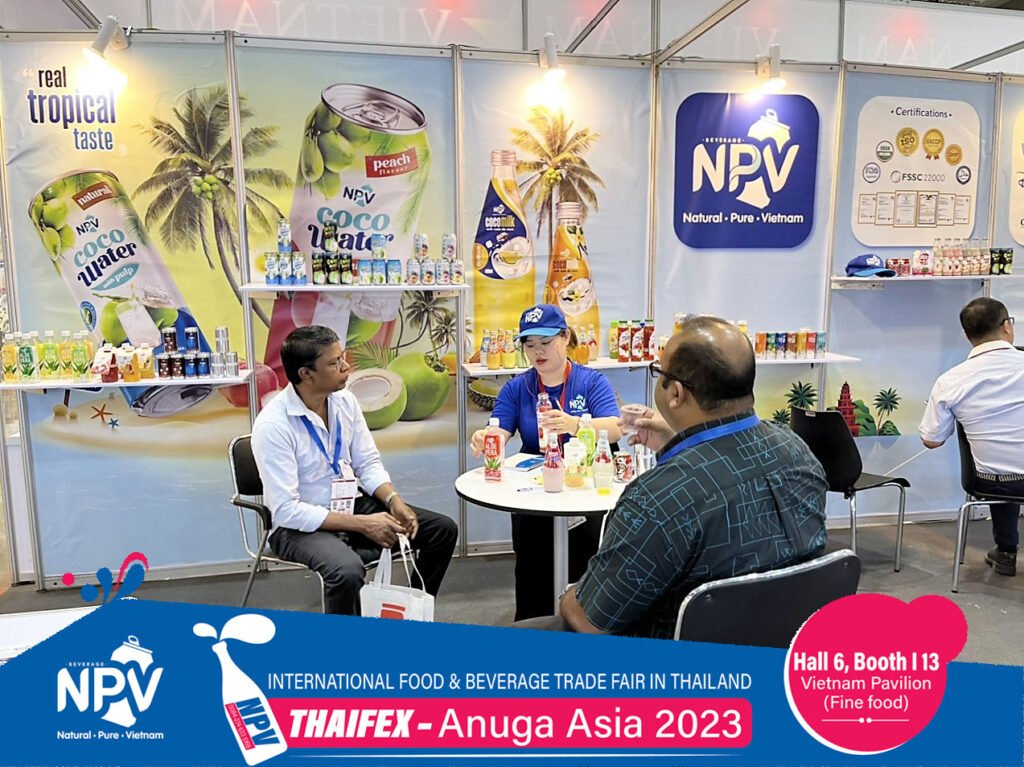
Vietnam’s Role in the Next Wave of Tropical Beverages
Vietnam is not only a fruit supply country anymore. It is becoming a full beverage export ecosystem. The shift is driven by:
Fruit diversity and aroma advantage
Vietnamese guava, mango, passion fruit, pineapple, and dragon fruit have aroma profiles that stand out in global blends. That makes Vietnam a strong flavor source for modern drinks.
Manufacturing scale with customization
Vietnam supports scalable production for global programs while still allowing flexibility for private label differentiation. NPV’s model mirrors that national advantage.
Strategic location for global shipping
Vietnam’s export logistics and port networks support efficient distribution to Asia-Pacific, the Middle East, Europe, and beyond. This makes Vietnam Juice Manufacturer partners more attractive year after year.
What “From Farm to Can” Looks Like in Real Products
NPV’s system appears across its product portfolio. You’ll see it in:
Single-fruit tropical lines
Products where fruit identity is the hero. Mango, guava, passion fruit, pineapple, mangosteen, soursop, orange. These lines depend heavily on stable fruit maps and intake control.
Mixed tropical blends
These are popular for global summer programs. Blend stability is harder than single-fruit products because every ingredient must stay balanced. NPV’s planned sourcing ensures that.
Textured beverages
Textured drinks with nata de coco, aloe pulp, or popping boba require both flavor stability and texture consistency. Fruit must complement inclusions rather than fight them.
Sparkling tropical drinks
Sparkling fruit beverages highlight aroma and freshness. If fruit quality is inconsistent, sparkling lines fail quickly. NPV’s controlled extraction and aroma protection are designed for these products.
The Long Game: Why NPV Invests in Discipline Over Hype
Consumers may buy a product once because of a label, but they buy again because of taste. For export buyers, repeat purchase is everything. That is why NPV focuses on discipline over hype:
- build stable sourcing
- grade intake strictly
- preserve aroma while ensuring safety
- reproduce formulas exactly
- protect taste through packaging and logistics
This long-game approach is what turns a single export order into a multi-year partnership.
FAQs
- What does “from farm to can” mean at Nguyen Pham Viet Beverage Co., Ltd?
It means NPV controls the full chain—from fruit region planning and intake grading to processing, formulation repeatability, and export packaging—so Fruit Juice quality stays consistent across shipments. - Why is intake grading important for tropical beverages?
Because tropical fruits vary naturally. Without grading for sweetness, acidity, ripeness, and aroma, the final drink can change flavor from batch to batch, which hurts consumer trust. - How does NPV keep flavor consistent across seasons?
NPV builds fruit maps, plans sourcing according to harvest cycles, and uses reference flavor profiles during production to match every batch to the same taste standard. - What kinds of products can buyers develop with NPV through ODM?
Buyers can co-develop Tropical Fruit Juice, sparkling fruit beverages, textured drinks with nata de coco or aloe pulp, and mixed tropical blends, including packaging and export compliance. - Is NPV suitable for private label beverage programs?
NPV supports private label partners through stable re-order quality, fast development timelines, and scalable OEM/ODM manufacturing. - Why are global buyers choosing Vietnam for tropical juice production?
Vietnam offers multi-season tropical fruit supply, strong aroma profiles, competitive manufacturing scale, and improving export logistics—making Vietnam Juice Manufacturer partners increasingly reliable.