
A few years ago, beverages were mainly judged by flavor alone. Today, consumers want more than taste—they want experience. They want a drink that feels fun, fresh, and interactive. This shift has sparked a worldwide boom in textured beverages: drinks filled with chewy nata de coco, silky aloe pulp, bursting popping boba, or exciting fruit bits. Across Asia, the Middle East, Europe, and even North America, the “drinkable dessert” trend is redefining what people expect from ready-to-drink products.
At the center of this movement, Nguyen Pham Viet Beverage Co., Ltd (NPV) is positioning itself as one of Vietnam’s most adaptable producers of modern textured drinks. With Vietnam’s tropical fruit strengths and a manufacturing system built for export, NPV develops beverages that combine flavor authenticity and stable inclusions—making it easier for international brands to capture this fast-growing category through OEM and ODM partnerships. Whether it’s Fruit Juice with nata de coco, aloe vera beverages, or popping boba lines, NPV is turning texture into a competitive advantage.
Key takeaways
- Textured drinks are a global trend driven by consumers seeking fun mouthfeel and premium value
- Nguyen Pham Viet Beverage Co., Ltd develops stable inclusions like nata de coco, aloe pulp, and popping boba for export markets
- Texture adds differentiation to Fruit Juice and sparkling beverages, boosting repeat purchase
- Vietnam’s tropical fruit identity pairs naturally with inclusions for Tropical Fruit Juice innovation
- NPV’s OEM/ODM model helps brands launch trend-ready textured beverages faster
- Consistency of inclusions and flavor stability are critical for scaling textured drinks globally
Why Textured Drinks Are Everywhere Right Now
Textured beverages are no longer a niche Asian trend. They are a global movement powered by three connected forces: consumer psychology, social media culture, and premiumization.
Consumers want drinks that “do something”
Modern buyers are bored of plain refreshments. Texture gives a drink a playful purpose: chew, burst, scoop, or sip in layers. The moment a consumer feels nata de coco cubes or popping boba pearls, the drink becomes memorable.
Social media rewards visual and sensory novelty
A drink with inclusions looks more exciting than a flat liquid. Jelly cubes, floating fruit pulp, and boba-like pearls photograph well. That visibility accelerates global adoption, especially among younger consumers.
Texture signals premium value
Even if the base liquid is still Fruit Juice, adding inclusions increases the perceived value. For retail buyers, textured drinks justify higher price points and stand out in crowded shelves.
The Three Textures Leading Global Demand
While textured drinks include many formats, three types dominate international growth because they match different consumer expectations.
Nata de coco: chewy, tropical, and refreshing
Nata de coco offers a light chew that works perfectly with fruit-based drinks. It’s widely loved in Southeast Asia, growing fast in the Middle East, and increasingly visible in Europe for tropical blends.
Aloe pulp: smooth, clean, and natural
Aloe pulp brings a soft texture associated with freshness. Consumers often connect aloe drinks to “clean hydration” and gentle mouthfeel. This texture pairs well with lighter fruit flavors.
Popping boba: fun, bursting, and youth-driven
Popping boba brings a playful surprise. Each sip creates a burst of flavor, which is why it spreads quickly through youth-driven markets and dessert-inspired drink lines.
NPV chooses these three not only because they are trending, but because they are scalable and export-friendly when controlled properly.
NPV’s Approach to Textured Beverage Innovation
Textured beverages are harder to produce than ordinary drinks. The challenge isn’t only adding inclusions—it’s ensuring they stay consistent, safe, and enjoyable from factory to retail shelf. NPV addresses this through a structured system.
Inclusion sourcing that prioritizes stability
NPV selects inclusions based on:
- firmness retention through shelf life
- stability under heat processing
- flavor neutrality or compatibility
- consistent cube/pearl sizing
- export durability in multiple climates
This matters because inclusions are often the first part of a drink consumers judge. If nata is too hard, aloe too mushy, or boba too fragile, the product fails regardless of how good the liquid tastes.
Balancing flavor and mouthfeel together
NPV formulates textured drinks as a full experience, not a base liquid with extras. That means controlling sweetness, acidity, and aroma to support texture. A guava drink with nata needs a fragrance strong enough to match chewiness. A sparkling mango line with popping boba must keep the fruit identity clear even with bubbles and burst pearls.
Processing designed for inclusions
Inclusions respond differently to sterilization and filling. NPV controls:
- heat exposure to prevent texture collapse
- filling pressure to avoid breaking cubes or pearls
- viscosity management to suspend inclusions evenly
- mixing timing so inclusions don’t sink or float unevenly
This is one reason international buyers choose NPV through OEM partnerships—because consistency is already built into the system.
Vietnam’s Tropical Fruits Are the Perfect Match for Texture
Texture without flavor is a gimmick. Tropical flavor without texture is now ordinary. The strongest products combine both.
Vietnamese fruit profiles enhance inclusion experience
Vietnamese mango, guava, passion fruit, pineapple, and dragon fruit are naturally aromatic. That aroma “fills the gaps” between chews or bursts, making the drink feel richer. This is why Tropical Fruit Juice with texture is often more satisfying than plain juice.
Multi-season supply supports repeatable textured lines
Textured beverages tend to be re-ordered frequently once they become popular. Vietnam’s multi-harvest capability ensures NPV can scale stable fruit supply to match the rising demand for these products.
Regional fruit identity is a selling point
Consumers love authentic fruit storytelling. “Vietnam mango with nata de coco” or “Mekong guava with aloe pulp” feels both exotic and trustworthy to international buyers.
NPV’s Textured Product Directions
NPV structures its textured innovation around consumer preferences and regional trends. Each direction is export-driven.
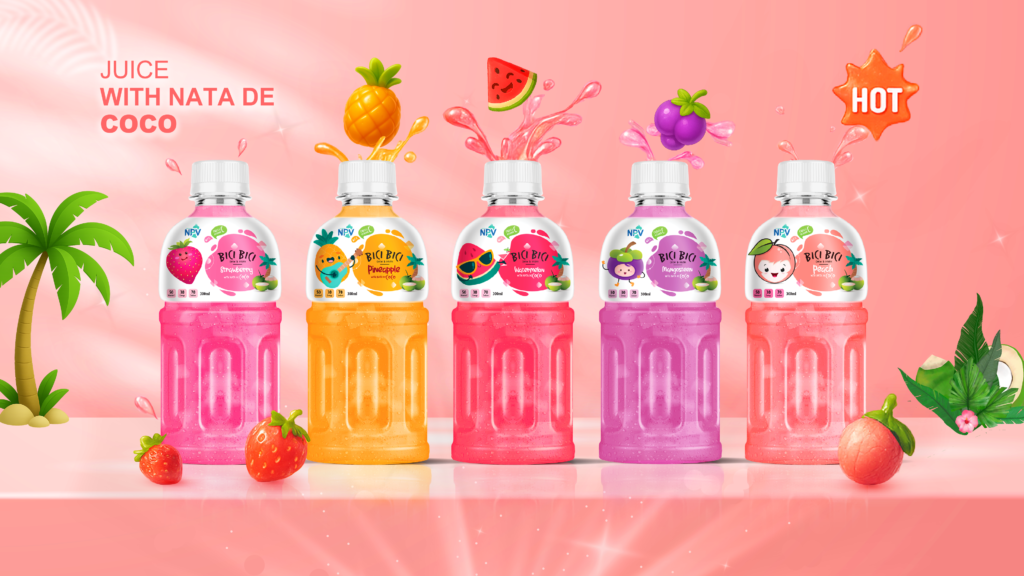
Fruit juice with nata de coco
This is a classic format that continues to grow. NPV develops combinations like mango, lychee, pineapple, mixed fruit, and guava with nata. The goal is to keep the drink light enough for refreshment, yet chewy enough for enjoyment.
Aloe vera beverages with tropical fruit blends
Aloe pulp has a clean mouthfeel. NPV uses it in fruit pairings that highlight freshness:
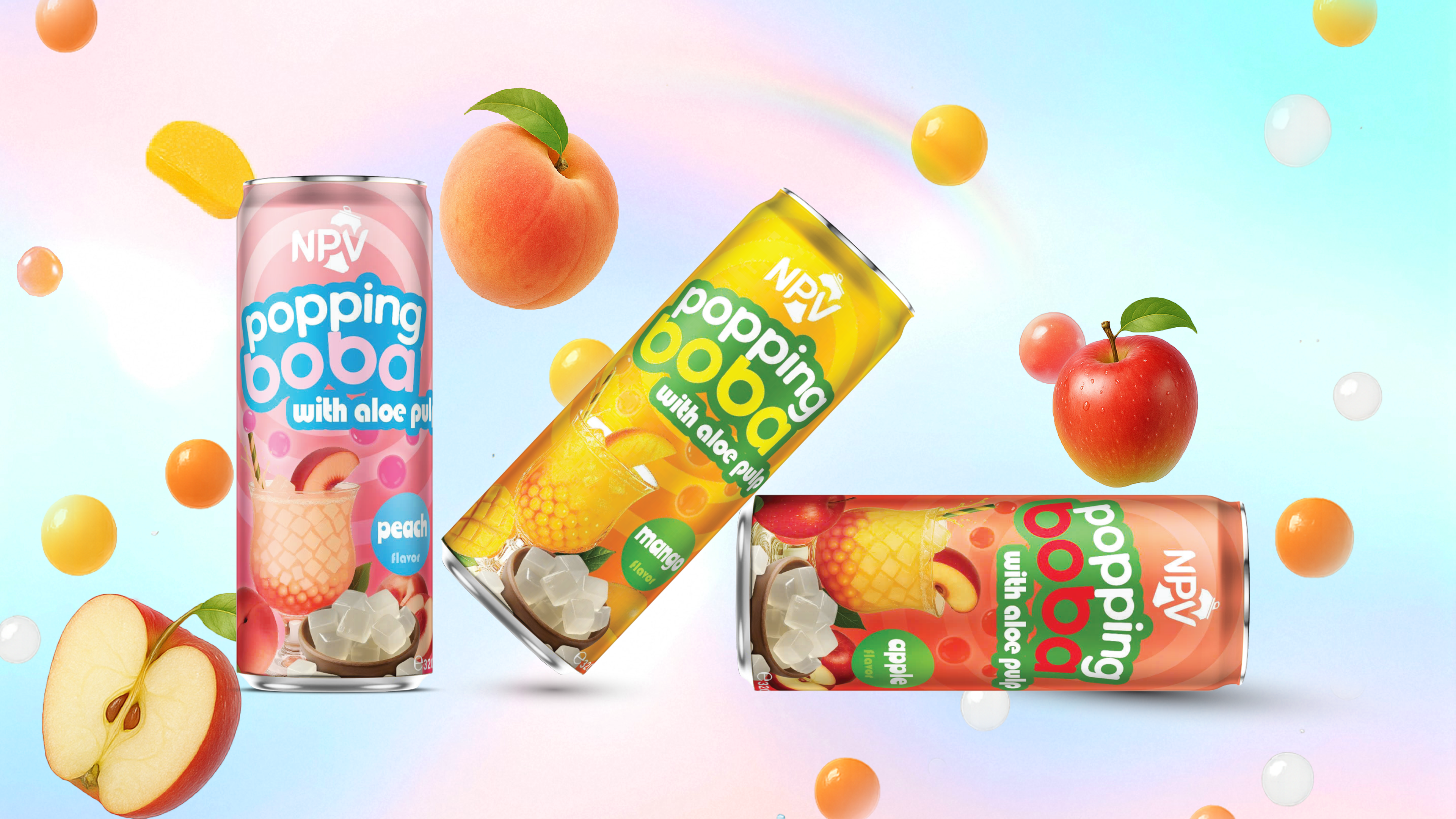
- aloe + peach
- aloe + mango
- aloe + apple
- aloe + mixed tropical
- aloe + passion fruit
These products perform strongly in markets seeking softer texture experiences.
Popping boba fruit drinks
Popping boba is the newest wave. NPV integrates it into fruit juices and sparkling drinks where burst pearls add an interactive “wow.” These lines are ideal for youth-driven retail channels.
Mixed texture “dessert-inspired” beverages
NPV is also exploring layered or combination textures for brands that want to push premium novelty. For example, fruit juice with both pulp and nata, or aloe beverages with subtle popping boba accents.

What Global Buyers Look For in Textured Drinks
International importers and private label brands want to join this trend, but they are cautious. Their concerns usually fall into five areas, which NPV is built to solve.
Texture consistency across shipments
Traditional suppliers may deliver great first shipments and weaker second shipments due to inclusion variation. NPV controls inclusion specs tightly and tests batch-to-batch performance to avoid drift.
Shelf stability in hot climates
Textured drinks are often shipped to regions with high temperatures. NPV designs products to stabilize inclusions so they don’t soften excessively or break down.
Even distribution of inclusions
Consumers hate opening a bottle and finding all nata sunk at the bottom. NPV adjusts viscosity and filling flow so cubes and pearls stay evenly suspended.
Export-compliant safety
Inclusions can create microbial risks if not managed correctly. NPV applies disciplined sterilization while protecting inclusion texture, meeting export standards for multiple destination markets.
Fast development cycles
Trends move quickly. Buyers want textured drinks now, not next year. NPV’s ODM process supports rapid concept-to-product timelines.
NPV’s OEM/ODM Advantage in Textured Beverages
Textured drink trends benefit brands, but only if they can launch quickly and reliably. NPV’s partnership system helps in two distinct ways.
OEM for established brands
If a buyer already has a concept or formula, NPV manufactures it consistently at export scale. This is ideal for brands who want a stable Vietnamese production base.
ODM for growth-focused buyers
NPV supports full product creation:
- selecting fruit base and sweetness style
- choosing inclusion types, sizes, and ratios
- developing taste direction aligned to market
- testing shelf stability and texture endurance
- selecting packaging format (cans, PET, glass)
- preparing export labeling requirements
ODM allows new brands to enter textured categories without building their own R&D teams.
Why Textured Drinks Fit Private Label Strategies
Private label is growing globally because retailers want differentiated products with strong margins. Textured beverages fit perfectly.
High differentiation in crowded shelves
A tropical juice drink without texture competes in a crowded category. Adding nata, aloe, or boba instantly separates it.
Higher perceived value = better pricing
Retailers can price textured drinks higher because consumers believe they are getting a premium experience. That improves private label profitability.
Trend longevity across markets
Texture is not a short-term fad. As long as consumers enjoy interactive drinks, textured lines will remain relevant. NPV helps retailers build long-term textured product portfolios.
The Future of Textured Drinks and NPV’s Role
Textured beverages are evolving beyond simple inclusions. The future will likely bring:
- more hybrid textures (pulp + nata, seeds + boba)
- sparkling textured lines
- lower sugar, cleaner-label textured beverages
- region-specific flavor-texture pairings
- premium dessert-inspired RTD drinks
NPV is preparing for this future by strengthening fruit sourcing, refining inclusion stability systems, and expanding development flexibility for partners worldwide. With Vietnam’s fruit strengths and NPV’s export-ready manufacturing, textured drinks are not just a trend to follow—they are a category to lead.
FAQs
- Why are textured drinks growing so fast worldwide?
Textured drinks offer more than flavor—they deliver an interactive mouthfeel experience. Social media visibility and premium positioning also accelerate growth, especially among younger consumers. - What textured inclusions does Nguyen Pham Viet Beverage Co., Ltd specialize in?
NPV focuses on nata de coco, aloe pulp, and popping boba. These textures are globally scalable, export-friendly, and strongly aligned with tropical fruit beverages. - How does NPV keep inclusions stable through shelf life?
NPV controls inclusion specs, processing conditions, viscosity, and filling systems. This prevents nata from hardening, aloe from collapsing, and popping boba from breaking. - Which fruit bases pair best with nata de coco or aloe pulp?
Nata de coco works well with mango, lychee, pineapple, mixed fruit, and guava. Aloe pulp pairs well with soft, fresh profiles like peach, apple, mango, and passion fruit blends. - Can buyers customize textured drinks through ODM at NPV?
NPV’s ODM model allows buyers to co-develop fruit bases, sweetness direction, inclusion type and ratio, packaging, and export compliance. - Are textured drinks suitable for hot-climate export markets?
They can be, if made correctly. NPV designs textured beverages with shelf stability and texture endurance in mind, ensuring they remain enjoyable after long shipping and storage in warm regions.